
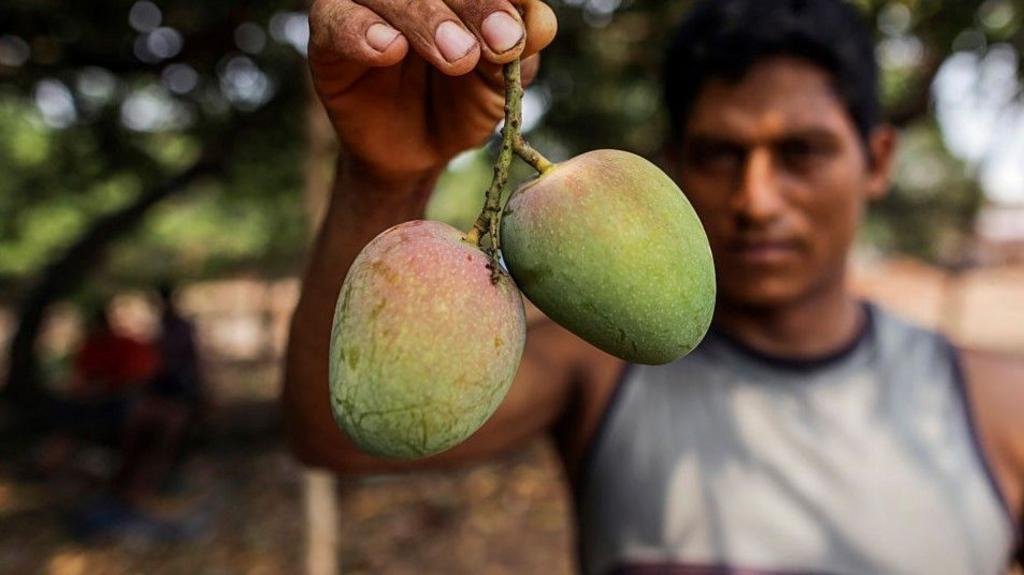
Indian mango farmers are facing numerous challenges due to climate change, including unpredictable seasons, increased input costs, and reduced yields. To address these issues, researchers are developing new varieties of mango that can tolerate wider temperature ranges and resist pests and disease.
Genetic science is helping to speed up the breeding process, with the sequencing of the mango genome in 2016. This has allowed researchers to identify genes linked to fruit color, aroma, sweetness, flowering behavior, climate resilience, and disease tolerance.
Farmers are embracing innovation, with techniques such as scientific pruning, canopy management, and growth regulators being used to control tree size, induce flowering, and manage early or uniform harvests. Other methods, such as “bagging” and “girdling”, are also being used to improve fruit quality and reduce exposure to pests and disease.
Older orchards can be rejuvenated by cutting the trees down to between 14 and 18 feet in height, which can improve flowering, fruit size, and quality. Some farmers are also experimenting with greenhouses to control temperature and reduce the risk of pests and disease.
Exporters are also looking to modernize their techniques, with some using greenhouses and protected cultivation to ensure consistent quality and reliable exports. With the global demand for mangoes increasing, it is essential for Indian farmers to adopt modern techniques to remain competitive and sustainable.
Modern Techniques for Mango Farming
- Scientific pruning and canopy management
- Growth regulators to control tree size and induce flowering
- Bagging to reduce exposure to pests and disease
- Girdling to improve fruit quality and reduce disease
- Greenhouses and protected cultivation for controlled temperature and reduced pest risk
Benefits of Modern Mango Farming
- Improved fruit quality and yield
- Increased disease resistance and reduced pesticide use
- Enhanced climate resilience and adaptability
- Increased export potential and competitiveness
- Improved farmer livelihoods and sustainability








