
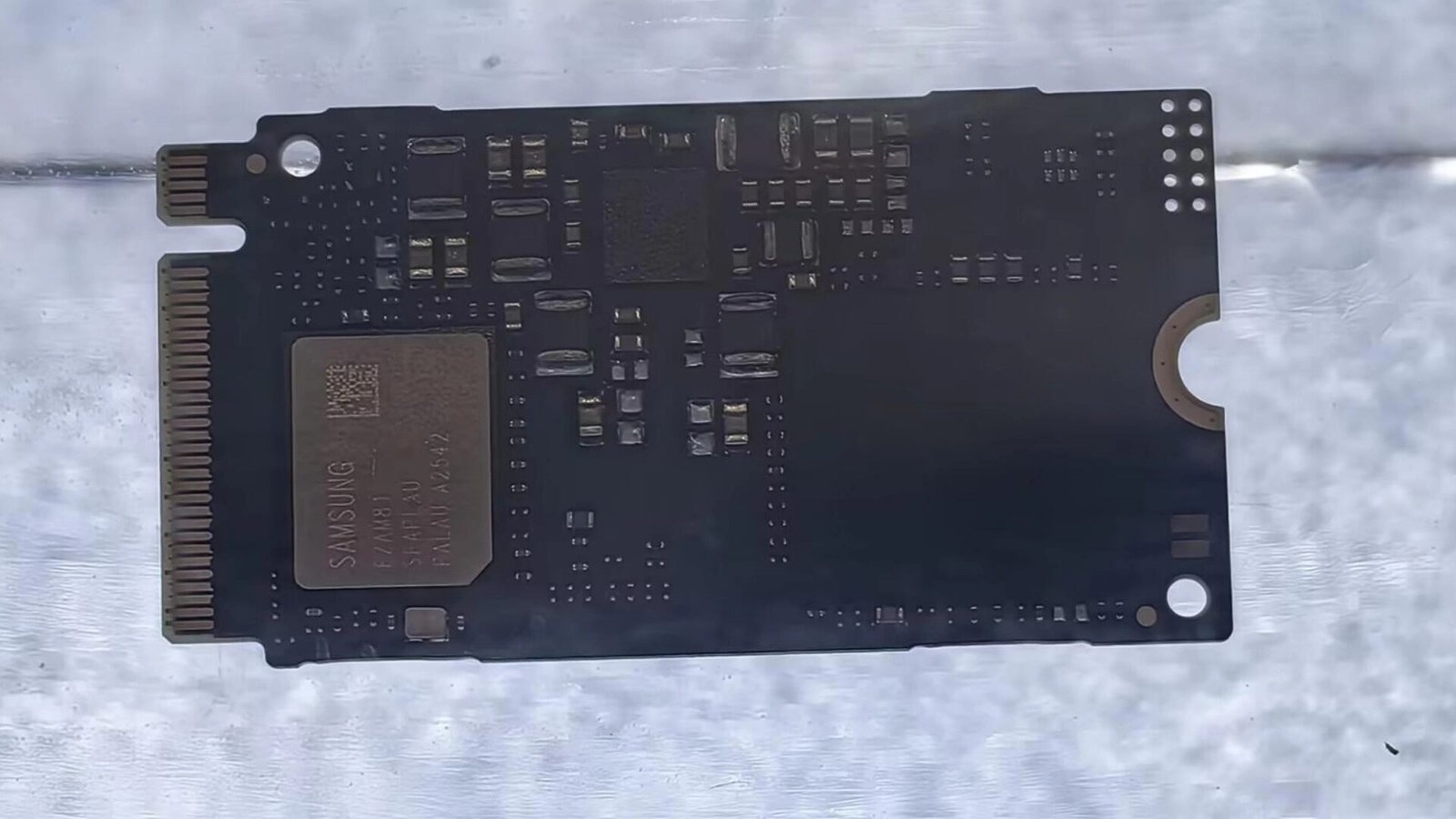
Samsung is pushing the boundaries of storage technology with its latest PCIe 5.0 QLC SSD, the BM9K1. This groundbreaking drive combines a RISC-V-based controller with cutting-edge QLC NAND to deliver blistering speeds of up to 11.4 GB/s—specifically designed for personal AI workloads. As AI becomes more integrated into everyday computing, Samsung’s innovation could redefine how users handle data-intensive tasks.
How Samsung’s PCIe 5.0 SSD Breaks the Mold
Traditional SSDs rely on proprietary controller architectures, but Samsung’s BM9K1 takes a different approach. By leveraging open-source RISC-V, the company has created a flexible, customizable foundation for its storage solution. This shift not only reduces development costs but also allows for faster iteration and optimization tailored to specific use cases like AI training and inference.
RISC-V: The Open-Source Advantage
RISC-V’s modular design lets Samsung fine-tune the controller for PCIe 5.0’s 128 Gbps bandwidth. Unlike closed architectures, RISC-V’s open nature means developers can adapt the controller to future standards without waiting for vendor updates. This agility is critical in a market where storage demands evolve rapidly.
Speeds for AI Workloads
The BM9K1’s 11.4 GB/s read speed is a 40% improvement over previous-gen PCIe 4.0 SSDs. For context, this means loading a 100 GB AI model dataset takes just 8.7 seconds—ideal for developers and researchers working with large neural networks. Samsung also optimized the QLC NAND for endurance, ensuring it can handle frequent read/write cycles typical of AI workflows.
Why This Matters for Everyday Users
While the BM9K1 targets AI professionals, its benefits trickle down to all users. Faster storage means quicker boot times, snappier app launches, and smoother multitasking. Gamers and video editors will appreciate the reduced load times, while casual users will notice a more responsive system overall.
Key Features to Know
- PCIe 5.0 Interface: Supports up to 128 Gbps bandwidth for maximum throughput.
- RISC-V Controller: Open-source architecture enables customization and future-proofing.
- QLC NAND: Balances capacity and cost for high-volume storage needs.
- 11.4 GB/s Speeds: Ideal for AI, 4K editing, and large file transfers.
Future-Proofing Your Storage
As AI becomes a staple in personal computing, storage solutions must adapt. Samsung’s RISC-V approach ensures the BM9K1 can evolve alongside emerging standards. For example, future firmware updates could unlock support for PCIe 6.0 or NVMe 2.0 without requiring a hardware overhaul.
For now, the BM9K1 is a glimpse into the future of storage. It’s not just about speed—it’s about flexibility, scalability, and meeting the demands of tomorrow’s technology. Whether you’re an AI developer or a casual user, Samsung’s innovation sets a new benchmark for what SSDs can achieve.
What do you think? Would you upgrade to a PCIe 5.0 SSD for AI tasks? Share your thoughts in the comments below!








