
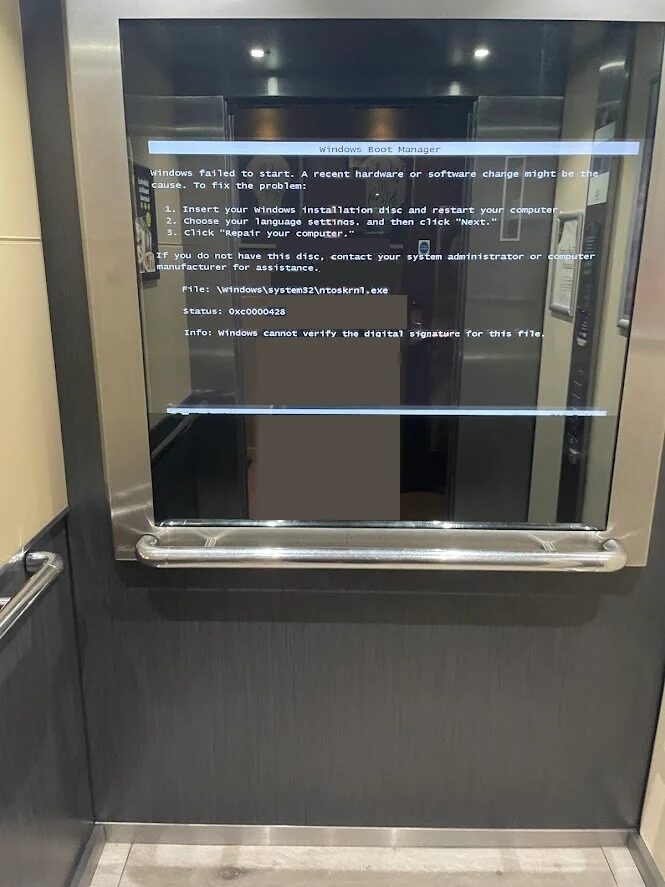
Smart Mirror Shows Dumb Windows Error in Elevator
Imagine stepping into an elevator and seeing a smart mirror display a Windows error screen. Not a sleek interface offering directions or weather updates, but a cryptic 0xc0000428 message that reads “Crash detected.” This real-world tech mishap, captured by a The Register reader in a UK hotel, highlights how even cutting-edge systems can falter in the most unexpected places.
When Smart Tech Goes Off the Rails
Smart mirrors are designed to simplify life—displaying news, managing tasks, or even suggesting outfits. But in this case, the mirror became a digital red flag. The Windows Boot Manager blamed a “recent hardware or software change,” a vague diagnosis that could mean anything from corrupted drivers to failed updates. The error code 0xc0000428 hints at a digital signature issue, likely involving the ntoskrnl.exe file—a critical Windows component.
For most users, this wouldn’t be a crisis. But in an elevator? Suddenly, a tech glitch feels alarmingly personal. Would you trust a Windows-powered elevator to deliver you safely to the 13th floor when it can’t even count past 9 (remember Windows 95, 98, ME, and the baffling leap to Windows 7)?
Why This Matters for Everyday Tech Users
- Hidden Risks: Even “smart” systems in public spaces can harbor unstable software.
- Design Flaws: Poor error handling turns technical jargon into user confusion.
- Trust Issues: When tech fails in high-stakes environments, it erodes confidence.
Fixing the Unfixable: A Tech User’s Guide
Microsoft’s own advice for this error? “Nuke it from orbit.” In practical terms, that means reinstalling Windows—a nuclear option for a system that should be reliable. Here’s how to avoid similar pitfalls:
- Regular Backups: Always maintain a recovery point before major updates.
- Test Environments: Critical systems should run on isolated hardware, not consumer OSes.
- Professional Support: For public-facing tech, hire experts to handle software maintenance.
Lessons from the Elevator Incident
This incident isn’t just a joke about Microsoft’s numbering quirks (Windows 1.0 to 11 is a timeline only a developer could love). It’s a reminder that:
- Even “smart” systems need robust error handling.
- Public tech should prioritize stability over flashy features.
- Users deserve clear explanations, not cryptic codes.
What’s Next for Smart Mirror Tech?
As smart mirrors become more common in hotels, offices, and retail spaces, this incident underscores the need for:
- Redundancy: Mirrors should default to a basic interface when software fails.
- Transparency: Error messages should guide users, not terrify them.
- Human Oversight: Automated systems still need human monitoring for critical functions.
Until then, we’ll keep watching for the day a smart mirror offers more than just a reflection—and less than a Windows crash screen.
Share Your Tech Mishaps
Have you encountered a tech failure that made you question your life choices? Share your story in the comments below. Let’s turn these stories into lessons for better tech experiences.








