Introduction to Space-Based Data Centers
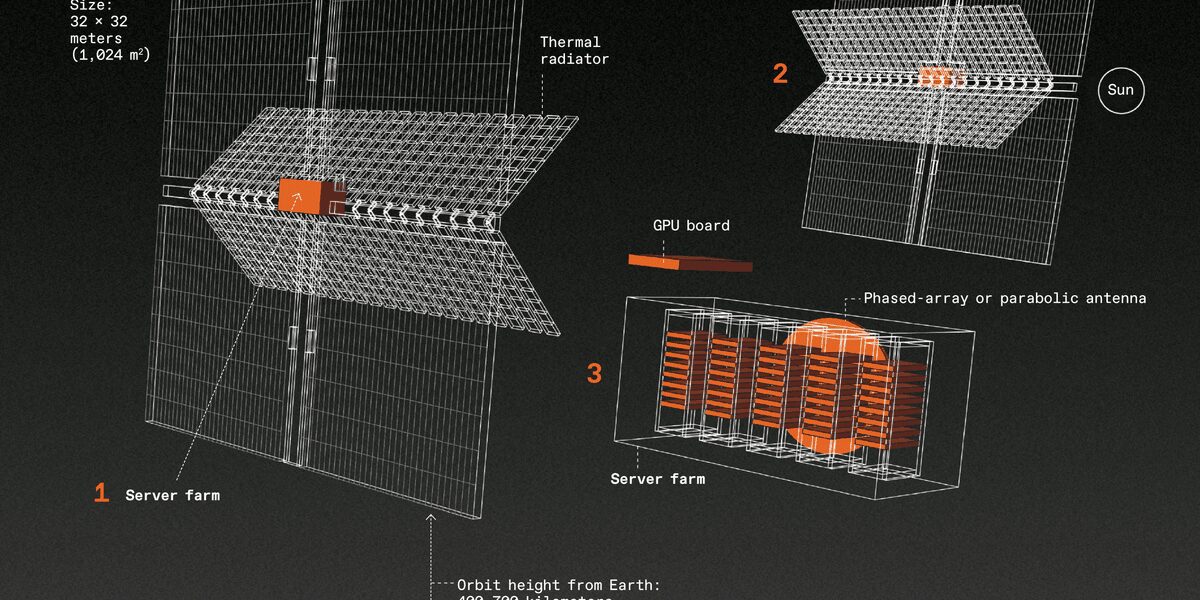
The concept of placing data centers in space has been gaining traction, with the promise of unlimited power being a major draw. However, the astronomical cost associated with such a venture is a significant drawback. Meanwhile, the idea of harnessing the power of space to fuel our growing data needs is an intriguing one. For example, a server-farm satellite could have 1,024 square meters of photovoltaic panels, generating 240 kilowatts of power.
Technical Challenges of Space-Based Data Centers
One of the biggest technical challenges in designing such a satellite would be removing the heat generated by the processing units. Additionally, circulating a fluid around the processors and into channels in radiator panels could be a likely approach to mitigate this issue. Furthermore, the server farm itself in a 240-kW satellite could be based on two racks of graphics processing units, each with 72 GPUs.
Scalability and Cost Considerations
To get a gigawatt of total processing power would require tightly networking 4,300 such satellites, weighing 30 million kilograms, in low-Earth orbit. However, the cost of launching and maintaining such a network would be prohibitively expensive. Therefore, it is essential to weigh the benefits of space-based data centers against the significant costs involved.
Benefits and Drawbacks of Space-Based Data Centers
On the one hand, space-based data centers could provide unlimited power and reduce the carbon footprint associated with traditional data centers. On the other hand, the high cost of launching and maintaining such a system could make it impractical. Meanwhile, the development of new technologies could potentially make space-based data centers more feasible in the future.
Some of the key benefits of space-based data centers include:
- Unlimited power generation
- Reduced carbon footprint
- Potential for increased processing power
However, there are also some significant drawbacks to consider:
- Astronomical cost of launching and maintaining the system
- Technical challenges associated with heat removal and radiation
- Potential for satellite collisions and other hazards
Conclusion
In conclusion, while the idea of space-based data centers is an intriguing one, it is essential to carefully consider the costs and benefits involved. Therefore, it is crucial to continue researching and developing new technologies that could make space-based data centers more feasible. Finally, as we move forward, it will be essential to weigh the potential benefits of space-based data centers against the significant costs and challenges involved.
Frequently Asked Questions
Here are some frequently asked questions about space-based data centers:
- What is the main advantage of space-based data centers? The main advantage is the potential for unlimited power generation.
- What is the biggest technical challenge associated with space-based data centers? The biggest technical challenge is removing the heat generated by the processing units.
- How many satellites would be required to achieve a gigawatt of processing power? Approximately 4,300 satellites would be required, weighing 30 million kilograms, in low-Earth orbit.
- What is the estimated cost of launching and maintaining a space-based data center? The cost is prohibitively expensive, making it a significant drawback.
- What are the potential benefits of space-based data centers? The potential benefits include unlimited power generation, reduced carbon footprint, and increased processing power.