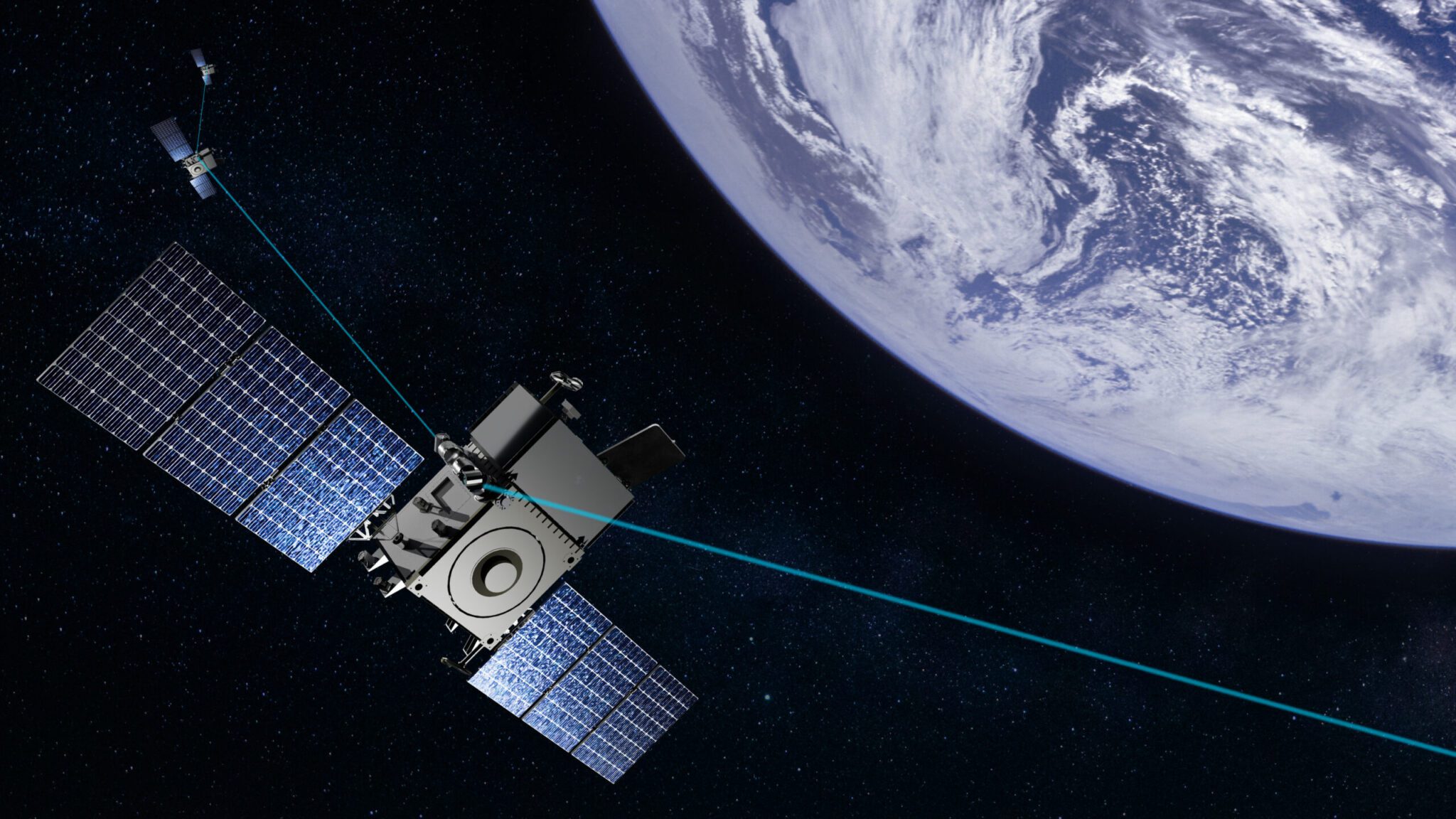
Introduction to Resilient Missile Warning Tracking
The Space Force has taken a significant step forward in enhancing its missile defense capabilities with the award of a $446.8 million contract to Kratos Technology and Training Solutions. This contract is for the development of the ground system for the Resilient Missile Warning Tracking (MWT) architecture in medium Earth orbit (MEO). Meanwhile, the Space Force is planning a baseline constellation of about 30 Resilient MWT MEO satellites.
Resilient Missile Warning Tracking Architecture
The Resilient Missile Warning Tracking architecture is designed to track ballistic and hypersonic cruise missiles. Additionally, the system will support the launch of the first two iterations of the Space Force’s MWT architecture in MEO, called Epoch 1 and 2. However, the recent award to Kratos is a follow-on to an original $55 million task order awarded to Parsons Corporation in April 2023.
Ground Management and Integration Contract
The Ground Management and Integration (GMI) contract award to Kratos will support the development of the ground system for the MWT architecture. Furthermore, Kratos will manage their operations at a corresponding ground-based Space Operations Center. For example, the company will be responsible for managing the launch and operation of the MEO satellites.
However, the program is one of three separate missile warning/tracking efforts being managed by the Space Force. Meanwhile, the service has awarded contracts to several companies, including Raytheon Intelligence & Space and Boeing’s Millennium Space Systems, to build Epoch 1 prototypes. Additionally, the service has awarded a $29 million Epoch 1 sensor payload design contract to L3Harris Technologies.
Epoch 1 and Epoch 2 Satellites
The first set of nine Epoch 1 satellites are scheduled to launch early in calendar year 2027. However, the service expects a second set of Epoch 1 satellites to be delivered in fiscal 2028, and the first of the Epoch 2 satellites in FY29. Meanwhile, the Space Force has awarded $386 million to Millennium Space Systems for an additional six satellites to make up the total of 12 Epoch 1 birds.
Finally, the service has awarded BAE Systems $1.2 billion to build 10 satellites for the second-generation Epoch 2 birds. Therefore, the Resilient Missile Warning Tracking system is expected to play a critical role in the Space Force’s missile defense capabilities.
Conclusion and Future Plans
In conclusion, the Space Force’s Resilient Missile Warning Tracking system is a critical component of the service’s missile defense capabilities. However, the system is still in the development phase, and several challenges need to be addressed before it can be fully operational. Meanwhile, the service is planning to launch the first set of Epoch 1 satellites in 2027, and the first set of Epoch 2 satellites in FY29.
Additionally, the Space Force is working to develop a resilient MWT architecture that can track ballistic and hypersonic cruise missiles. Therefore, the service is investing heavily in the development of new technologies and systems to support its missile defense capabilities. For example, the service is working to develop advanced sensor systems and ground-based command and control systems.
Finally, the Resilient Missile Warning Tracking system is expected to play a critical role in the Space Force’s ability to detect and track missiles. However, the system is still in the development phase, and several challenges need to be addressed before it can be fully operational. Therefore, the service is working to address these challenges and ensure that the system is fully operational as soon as possible.
Meanwhile, the Space Force is also working to develop other systems to support its missile defense capabilities. For example, the service is working to develop advanced ground-based command and control systems and sensor systems. Additionally, the service is working to develop new technologies to support its missile defense capabilities, such as advanced propulsion systems and materials.
Call to Action
In conclusion, the Space Force’s Resilient Missile Warning Tracking system is a critical component of the service’s missile defense capabilities. However, the system is still in the development phase, and several challenges need to be addressed before it can be fully operational. Therefore, the service is working to address these challenges and ensure that the system is fully operational as soon as possible.
Finally, we encourage readers to stay informed about the latest developments in the Space Force’s missile defense capabilities. Additionally, we encourage readers to follow our blog for the latest news and updates on the Resilient Missile Warning Tracking system and other space-related topics.