
Introduction to the Satellite Showdown
The satellite industry has witnessed its fair share of verbal sparring matches, with companies vying for control over preferred orbits and the electromagnetic spectrum. The Federal Communications Commission (FCC) often finds itself at the center of these disputes, regulating satellite communications. Recently, the exchanges between SpaceX and Amazon have taken a turn for the worse, with the FCC chairman weighing in on the matter.
The Issue at Hand: SpaceX’s Megaconstellation
SpaceX has applied to the FCC for permission to launch up to 1 million satellites to form a megaconstellation, providing data center services from space. Amazon, however, has petitioned the FCC to deny SpaceX’s request, citing that the plan is not grounded in reality. Amazon claims that deploying the proposed constellation would take centuries, even with the availability of all global launch capacity.
Amazon’s Concerns and Requests
Amazon is also seeking regulatory relief, as it faces a deadline to deploy half of its Amazon Leo constellation by July 30. With only a little over three months to go, Amazon has requested an extension, asking for the deadline to be moved to July 30, 2028. Meanwhile, Amazon has begun launching satellites for its Amazon LEO constellation, with about 200 in orbit now.
FCC Chairman Brendan Carr’s Intervention
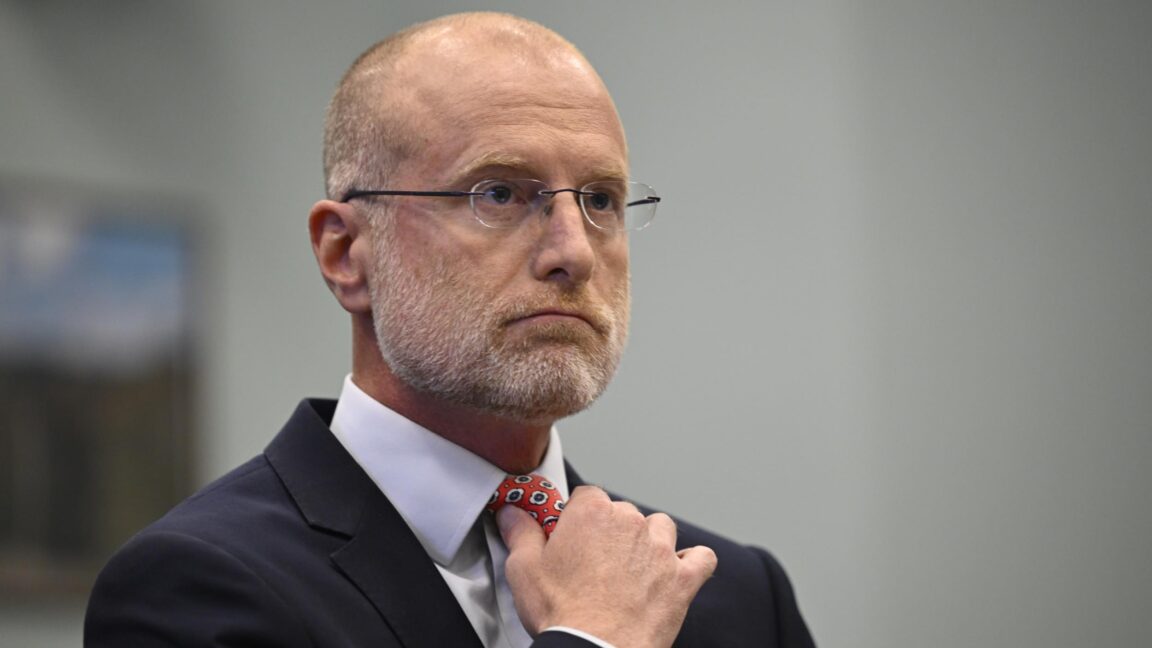
FCC Chairman Brendan Carr has injected himself into the SpaceX-Amazon dispute, stating that Amazon should focus on meeting its deployment milestone rather than filing petitions against companies that are putting thousands of satellites in orbit. Carr’s comments have sparked debate, with some arguing that SpaceX’s application for 1 million satellites is extraordinary and lacks critical information for evaluation.
Arguments for Both Sides
There are valid arguments to be made in favor of both SpaceX and Amazon. For example, SpaceX is likely to accelerate its satellite launch rate with the forthcoming Starship rocket, making Amazon’s claim of centuries-long deployment less likely. However, it is also valid to criticize SpaceX’s application for lacking critical information about the size, mass, and other details needed to evaluate the constellation for safety and other concerns.
Conclusion and Call to Action
In conclusion, the battle for satellite supremacy between SpaceX and Amazon is heating up. As the FCC continues to regulate satellite communications, it is essential for companies to prioritize transparency and cooperation. We urge readers to stay informed about the latest developments in the satellite industry and to support companies that prioritize responsible and sustainable practices.
For more information on the satellite industry and the latest news on SpaceX and Amazon, please visit our website. Additionally, we invite you to join the conversation on social media using the hashtag #SatelliteSupremacy.
Frequently Asked Questions
- What is the focus of the dispute between SpaceX and Amazon?
- How many satellites has SpaceX launched for its Starlink constellation?
- What is the deadline for Amazon to deploy half of its Amazon Leo constellation?
- What is the name of the new Internet constellation announced by Blue Origin?
- What is the role of the FCC in regulating satellite communications?








