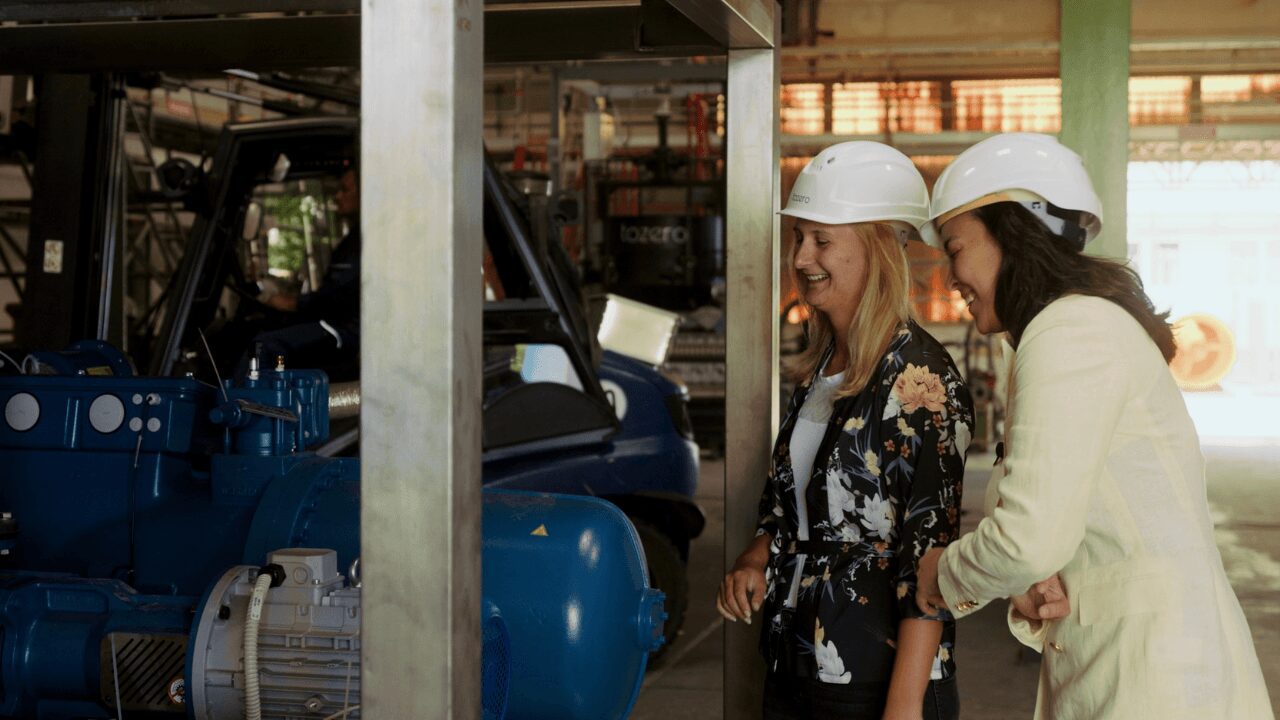
Sustainability Breakthrough: tozero’s Industrial Battery Recycling Plant in Europe
Europe’s energy transition hinges on securing critical raw materials like lithium and graphite. Yet, the continent remains heavily reliant on imports, creating a paradox: while demand surges, a growing stockpile of end-of-life batteries sits untapped. Enter tozero, a battery recycling startup that has launched Europe’s first industrial-scale plant to recover these materials at scale. This innovation marks a pivotal step toward sustainability and material independence.
Sustainability Through Industrial-Scale Recycling
Located in Bavaria’s Chemical Park Gendorf, tozero’s plant processes over 1,500 tons of battery waste annually. By extracting high-purity lithium carbonate, graphite, and nickel-cobalt mix, the facility prevents 6,000 electric vehicles’ worth of batteries from ending up in landfills. The recovered materials are already being used in construction, ceramics, and lubricants, with more applications on the horizon.
Founded in 2022 by Sarah Fleischer and Dr. Ksenija Milicevic Neumann, tozero has rapidly scaled from a pilot facility to industrial operations. In April 2024, it became the first European company to deliver recycled lithium to commercial customers—a milestone that underscores its role in building a sustainable battery ecosystem.
Overcoming Europe’s Critical Materials Paradox
Global lithium demand is projected to quadruple by 2030, while graphite demand in the EU could rise 25-fold by 2040. Yet Europe imports 99% of its lithium and relies on China for 90% of its graphite. This dependency clashes with the continent’s climate goals, as EV adoption accelerates and battery waste piles up.
- Problem: Europe lacks domestic sources of critical materials.
- Solution: tozero’s recycling plant turns waste into a circular supply chain.
- Impact: By 2035, recycling could bridge a 33% supply gap in critical materials.
How tozero’s Technology Works
Unlike traditional pyrometallurgy (which burns batteries at 1,400°C and loses lithium and graphite), tozero uses a proprietary acid-free, low-temperature hydrometallurgy process. This method recovers materials in a single cycle, producing purity levels suitable for direct reuse in manufacturing.
Key advantages include:
- Chemistry-agnostic: Works with all battery types, including those from OEMs like BMW.
- Regulatory-ready: Meets the EU’s 2031 Battery Directive (80%+ material recovery).
- Cost-competitive: Aims to rival mining on price while reducing environmental impact.
Validating Sustainability with OEMs
tozero’s partnerships with OEMs have been critical to proving its technology’s viability. Through pilot programs, the company demonstrated that its process:
- Handles diverse battery chemistries.
- Meets future EU recovery standards.
“The inbound interest from OEMs was a clear signal of demand,” says CEO Sarah Fleischer. “Our process is novel—no one has done this before. We’re closing the loop on materials Europe can’t afford to waste.”
From Lab to Industry in 4 Years
With a lean team of 30, tozero has achieved what many startups take a decade to accomplish. Its rapid growth aligns with the EU Critical Raw Materials Act, which mandates 25% of supply from recycling by 2030. By turning battery waste into a domestic resource, tozero is not just recycling—it’s redefining sustainability for the energy transition.
Conclusion: A Blueprint for Sustainable Innovation
tozero’s success shows that sustainability and industrial scalability can coexist. By recovering lithium, graphite, and other materials at scale, the company is helping Europe reduce its reliance on imports while tackling the growing battery waste crisis. As Fleischer notes, “This is about more than recycling—it’s about building a future where waste becomes a resource.”
Ready to explore how tozero is shaping the circular economy? Dive deeper into their technology and partnerships to see how sustainability is becoming a competitive advantage in the energy sector.