
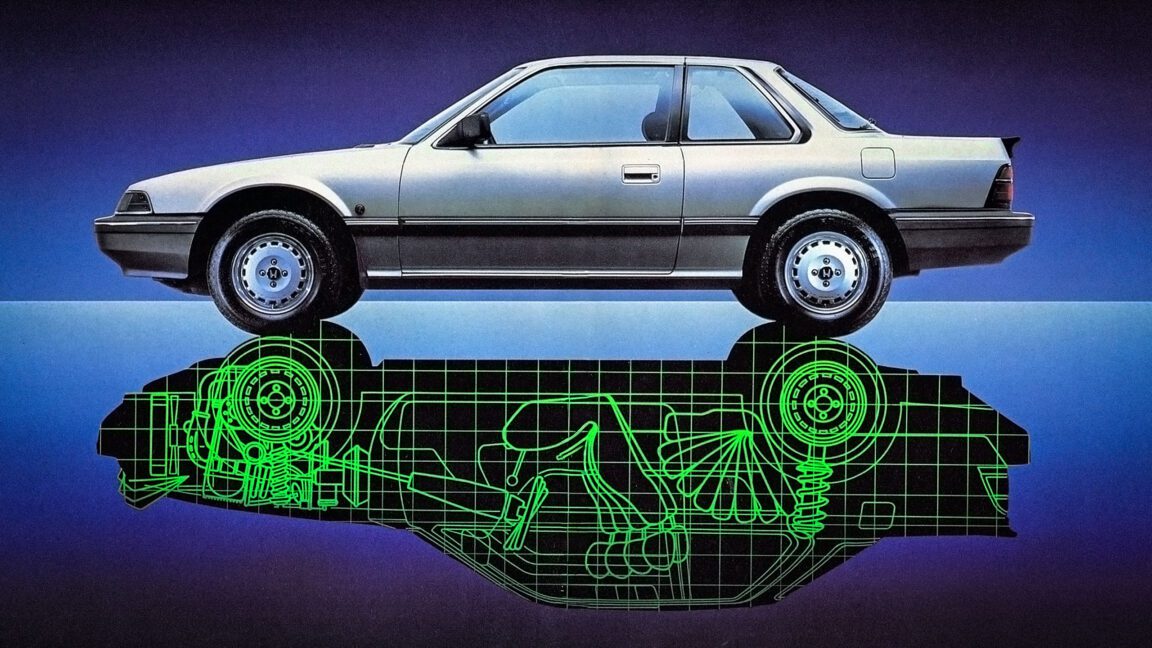
The Honda Prelude: A Legacy of Innovation
The Honda Prelude was never just a car. It was an engineering thesis disguised as a coupe: compact, disciplined, and unapologetically technical. At its best, it distilled Honda’s faith in precision manufacturing and clever packaging into something accessible and aspirational.
Introduction to the Prelude
The Prelude name carries expectations: balance over brute force, innovation over ornament, and a willingness to pursue mechanical elegance even when the market leans elsewhere. The original Prelude emerged during a turbulent period for the industry, shaped by constraint rather than excess.
A Time of Economic Turbulence
The Honda Prelude didn’t arrive during a champagne toast. It showed up in the middle of economic upheaval, when the global auto business stared nervously at its balance sheet and wondered whether the arithmetic still worked. The story began on August 15, 1971, when President Richard Nixon severed the dollar’s link to gold, effectively ending the Bretton Woods system.
Meanwhile, the oil shock in 1973 sent energy prices sharply higher and injected fresh uncertainty into global demand. For Honda Motor Co., with roughly 60 percent of its sales tied to the United States, the math shifted overnight. A stronger yen squeezed margins, and higher fuel prices threatened volume.
The New Honda Plan
Kiyoshi Kawashima, then president of Honda R&D and senior managing director of Honda Motor Co., introduced the New Honda Plan. This plan amounted to a corporate reset, with modernized management structures, streamlined decision-making, and a focus on global expansion rather than simply exporting into an increasingly volatile currency environment.
Additionally, Honda chose reinvention over retreat. The Prelude would become one expression of that shift, proof that even in turmoil, discipline and design could travel. For example, the Prelude’s innovative features, such as four-wheel steering and variable valve timing, debuted in the Prelude and showcased Honda’s commitment to engineering excellence.
Honda’s Newest Model
Honda’s American expansion started in 1959 with motorcycles. A decade later, the N600 arrived with two cylinders, modest size, and immense ambition. By 1973, as economic turbulence deepened, Honda introduced the Civic: a larger, four-cylinder, efficient, affordable hatchback perfectly calibrated for the moment.
Furthermore, the even-larger Accord followed in 1976, positioned as Honda’s first true world car. Both were powered by Honda’s CVCC engine, the first to meet the tough emissions standards of the 1970 US Clean Air Act without a catalytic converter. Its breakthrough was elegant engineering: a spark plug ignited a richer fuel mixture in a small prechamber, which then ignited a leaner mixture in the main cylinder, delivering cleaner combustion without costly add-ons.
Finally, having secured credibility with rational transport, Honda did something faintly irrational. It built a sports coupe, the Prelude, which was launched in 1978. The first-generation Prelude was equal parts boxy and sleek; an Accord underneath, but tighter, shorter, and more intentional.
Conclusion
In conclusion, the Honda Prelude is a testament to Honda’s commitment to innovation and engineering excellence. With its rich history, innovative features, and enduring legacy, the Prelude continues to inspire car enthusiasts around the world. Therefore, as we look to the future, we can learn from the Prelude’s legacy and appreciate the impact it has had on the automotive industry.
However, the Prelude’s story is not just about the past; it is also about the future. As Honda continues to innovate and push the boundaries of what is possible, we can expect to see even more exciting developments in the years to come. Meanwhile, the Prelude remains an important part of Honda’s history and a reminder of the company’s dedication to engineering excellence.
Ultimately, the Honda Prelude is a car that has left an indelible mark on the automotive industry. Its legacy continues to inspire and influence car designers and engineers around the world. As we move forward, we can learn from the Prelude’s history and appreciate the impact it has had on the world of cars.








