Introduction to Robot Movement
Making robots useful and affordable will need better motors. British YouTuber James Bruton wanted to build a giant walking robot from Star Wars – and ride around on it on his friend’s tennis court.
The Challenge of Creating Graceful Robots
To make it happen, he needed to build four powerful legs for the so-called At-At – which famously first appeared in The Empire Strikes Back – that he could control with some precision.
Actuators: The Key to Robot Movement
Actuators are the motors which drive all sorts of machinery. To bring a robot to life, motion-activating components, or actuators, are essential.
The Importance of Efficient Actuators
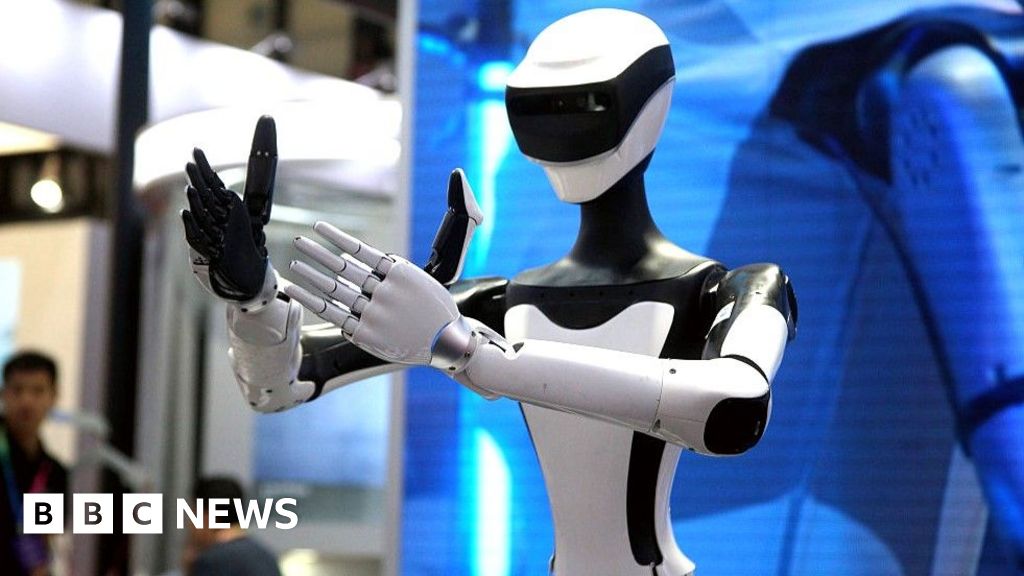
Generally speaking, actuators can either go in and out, or spin around in a circle, and there are many different ways of doing this. Combining actuators with artificial bodies or limbs allows you to create things like a robot arm, a robot dog – or a humanoid.
The Future of Robotics: More Efficient Actuators
If robots are to become more sophisticated, they will have to have more efficient, more precise and more intelligent actuators. Relatively few firms today can manufacture actuators at scale with a high level of precision, and these components are still a long way from the incredibly engineered muscles that allow animals to move with such grace and efficiency.
Overcoming the Limitations of Current Actuators
A new generation of actuators could in theory enable the transition from stumble-bots to far more balletic machines. For a long time, roboticists have used DC [direct current] motors to make robots move.
The Need for Back-Driveable Actuators
Such a motor is great if you want to spin a fan, for example, because it functions well at high speeds with low torque. However, humans don’t move the way fans spin, at all. We want to be able to lift things, and push things, and do things that require a lot of force and torque.
The Benefits of Advanced Actuators
And, if a robot arm were to swing out towards you, for safety reasons you would want to be able to immediately stop it and push it back without harming yourself, reverse that motion instantly. For one thing, that requires a back-driveable actuator.
Real-World Applications of Advanced Actuators
Another problem with today’s robots is they rapidly run out of batteries. Electric motors are terrible at that. Finally, really small actuators made using traditional electric motors tend to get too hot for their own good at such scales – another headache.