The Ultimate Guide to Fujifilm Instax Cameras and Printers
Instant cameras have been a staple of photography for decades, and Fujifilm’s Instax line has been leading the way in recent years. With a wide range of cameras and printers to choose from, it can be overwhelming to decide which one is right for you.
Which Instax Camera Should You Buy?
The first step in choosing the right Instax camera is to decide on the print size you want. Instax film comes in three sizes: Mini, Square, and Wide.
Instax Mini Film
The smallest of the bunch, Instax Mini film is roughly credit card size (3.4 inches x 2.1 inches) and is vertically-oriented with the large border on the short side. Prices on film fluctuate, but the cost of a Mini film pack is usually about $14 for 20 prints, which puts the price between $.60 and $.70 per print.
Instax Square Film
Don’t let the name fool you, Instax Square film is actually not quite square at 3.4 inches tall and 2.8 inches wide. They’re the most Polaroid-like, though they are smaller than Polaroids. Prices are around $1 per print.
Instax Wide Film
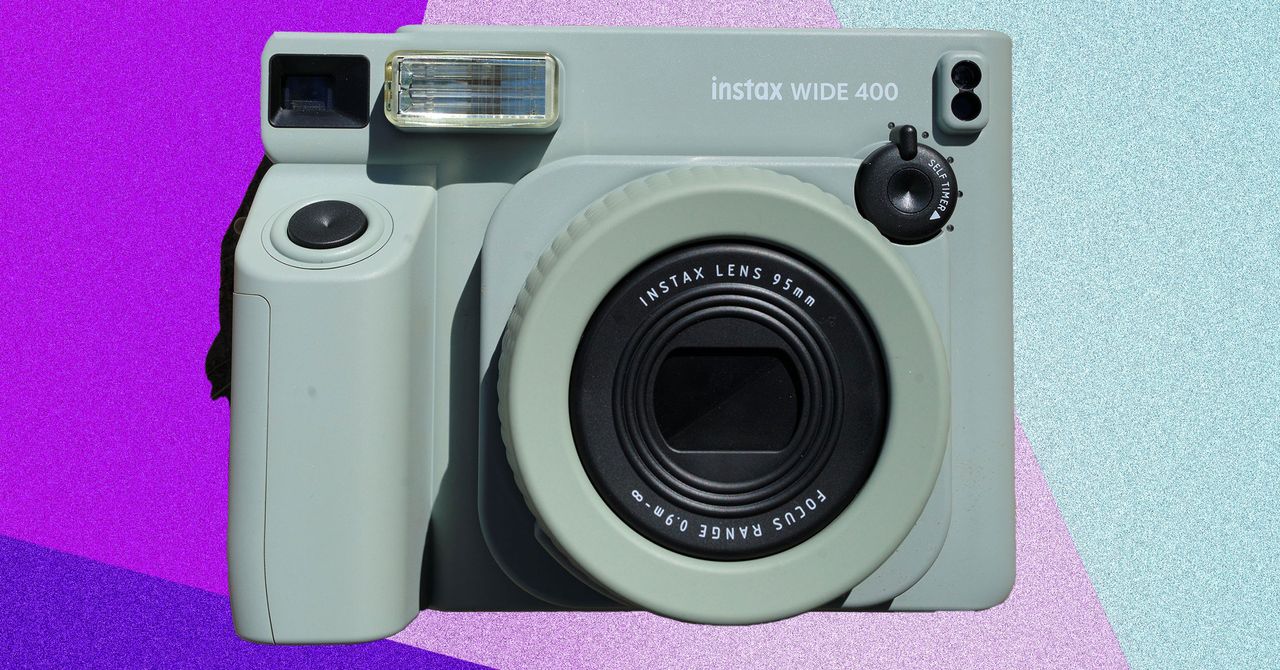
The Instax biggie, wide prints are 4.25 inches by 3.3 inches, and are horizontally-oriented with the wide border on the long edge. Instax Wide Film prices are the highest, at about $1-$1.20 per print.
The Best Instax Mini Camera and Printer Combo
The Instax Mini Evo is the best camera-printer hybrid in the Instax line. It prints Mini film, which is roughly the size of a credit card (3.4 inches x 2.1 inches). The body has a retro, film camera-inspired design (minus the viewfinder), but functions like rotating the aperture ring or ISO-style dial control lens effects and film effects respectively.
The Mini Evo uses a fixed aperture, F/2.0 and automatically switches shutter speed (1/4 to 1/8000 second) and ISO (100-1600) based on the exposure meter. The exposure meter is pretty accurate in my experience. High contrast scenes with deep shadows will stump it sometimes, but that’s okay because the Mini Evo captures your image to its internal memory (about 45 images, expandable to 1 GB with a microSD card) so you can check your shot on the rear screen before you print.
Alternative: The Instax Mini LiPlay+
The Instax Mini LiPlay+ is Fujifilm’s other hybrid camera and printer option. It’s newer, with some more effects available, and a rear selfie camera (so you can compose using the screen rather than a tiny mirror). I enjoyed testing the LiPlay+, but I prefer the design of the Mini Evo.
The Video Star
The Instax Mini Evo Cinema takes its design from the 1965 Fujica Single-8 cine camera, and includes a “Decades dial” to let you time-travel through the history of film photography by turning it. This is where the Evo Cinema gets fun. The effects allow you shoot in the style of jerky black-and-white video from the 1930s or the Handycam-style footage of the 1990s, as well as many more.
I was fond of the 1940s era effect, which adds that strangely faded color saturation that characterized film footage from that decade. The Mini Evo Cinema is the largest Instax camera I’ve tested, with a tall, thin design that I found tough to hold without using the included extra grip.
How We Tested Instax Cameras and Printers
Here at WIRED we like to extend testing to include “living with” the things we write about. In addition to testing new models when Fujifilm releases them, I own and regularly use several Instax cameras. I have been using Instax cameras and printers for almost two decades and shooting instant images for far longer than that.
To test Instax cameras I photograph a variety of scenes, varying light, color, and tones to see how the camera does across a wide spectrum of shooting scenarios (contrary to my photographer’s training, Instax cameras tend to give the best results in bright, afternoon or mid morning light). To test the Instax printers I use a variety of images from a variety of cameras to see how the printer handles warmer and cooler tones, whether there are any noticeable color shifts, and how the sharpness varies depending on the source.
Conclusion
With so many options available, it can be overwhelming to decide which Instax camera or printer is right for you. But by considering the print size you want, the features you need, and the price you’re willing to pay, you can find the perfect instant camera or printer for your needs.
Whether you’re a seasoned photographer or just starting out, Fujifilm’s Instax line has something for everyone. So why not give instant photography a try? You never know what kind of magic you might capture.