
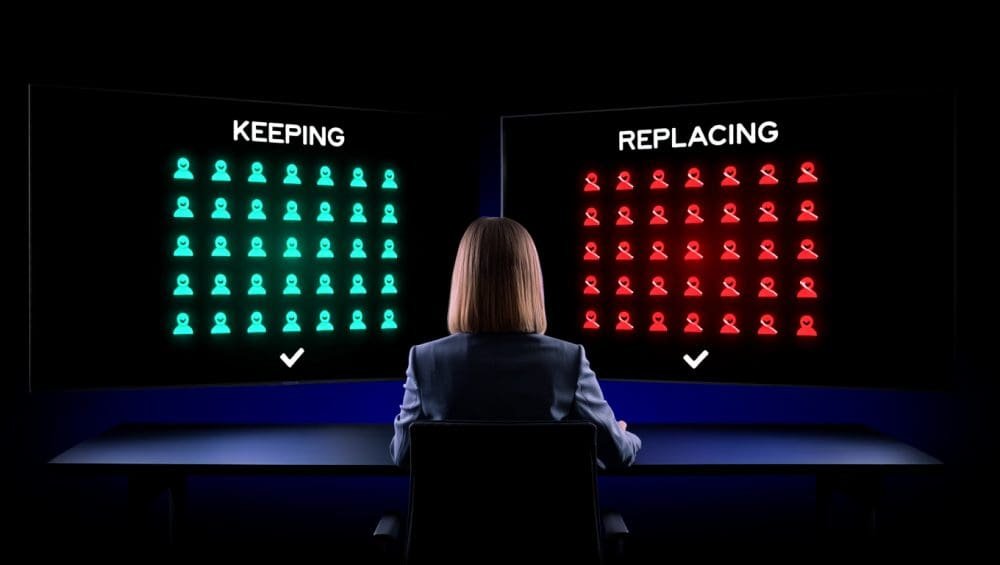
The Wave of AI Agent Churn To Come: Prompts Are Portable
As a seasoned tech executive, I’ve witnessed firsthand the rapid growth and adoption of AI agents in the B2B space. However, beneath the surface, a structural problem is brewing that will impact every AI agent vendor in the next 12-24 months.
The Problem: Portable Prompts and One-Year Contracts
During a recent board meeting for a breakout AI B2B leader at $100m+ ARR, I noticed a concerning trend. Many of their largest customers were signing one-year contracts, with some even opting for seven-figure deals. While this may seem like a win, it’s actually a sign of a deeper issue.
The problem isn’t product-market fit; it’s that the switching costs in AI agents are structurally lower than what we’ve seen in SaaS before. In traditional SaaS, switching was brutal, with months of data migration, retraining, and rebuilding integrations. However, AI agents are different. Fundamentally different.
Prompts Are Portable. And That Really Does Change Everything.
Here’s what really brought this home for me. We recently added a new AI sales agent at SaaStr, and to train it, we started by taking a prompt from another vendor that worked… and just giving it to the new vendor. Yes, we still had to train it, but the prompt was portable. Maybe 50-80% of the migration work was done just by cutting and pasting a prompt in a few minutes.
In old SaaS, switching your marketing automation platform was a six-month project with a dedicated team. But switching your AI sales agent? You copy-paste the core prompt, spend a few days tuning it, and you’re largely up and running.
The One-Year Contract Problem
Let’s get back to that board meeting, because the one-year contract dynamic deserves more attention. In traditional SaaS at $100M+ ARR, you’d expect to see a healthy mix of multi-year deals, especially in enterprise. Three-year contracts with annual escalators were the gold standard. But in AI agents, buyers are explicitly refusing to commit beyond one year. And it’s not because they’re unhappy – it’s because they’re rational.
Think about it from the buyer’s perspective:
- The underlying models are improving every quarter. What’s state-of-the-art today might be commoditized in six months.
- New entrants are launching weekly with increasingly capable offerings.
- And as we just discussed, the switching costs are dramatically lower than traditional SaaS.
So why would any smart buyer lock in for three years? You’d have to offer a massive discount to compensate for the optionality they’re giving up. And even then, many won’t do it.
The Math Gets Scary Fast
Let’s run some rough numbers on what this means at scale. A traditional SaaS company at $100M ARR with 92% gross retention loses ~$8M per year to churn. Painful but manageable, especially if you’re growing 40%+ and expanding within accounts.
Now imagine an AI agent company at $100M ARR where gross retention drops to 82% because of prompt portability and one-year contracts. That’s $18M in annual churn – more than double. To maintain the same net growth rate, you need to sell an additional $10M per year just to stay even. That’s $10M in extra bookings that goes straight to replacing churned revenue instead of driving growth.
What This Means for AI Agent Vendors
If you’re building an AI agent company, this should be sobering. Let me be direct:
- Your AI isn’t your moat. Your AI is table stakes.
- When we deployed an enterprise AI agent from Salesforce using copy-pasted prompts from a two-year-old startup – and both worked great – that tells you something important about where defensibility actually lives in this market.
So what is the moat? A few things still matter:
- Integration depth. Native Salesforce integration is genuinely better than bolted-on.
- Specialized infrastructure. Email deliverability, domain reputation, compliance frameworks.
- Network effects. Does your agent get smarter from aggregate customer data?
- Vertical depth. A medical coding agent or legal contract review agent with years of specialized training and proprietary datasets?
Conclusion
The wave of AI agent churn to come is real, and it’s not just about the technology. It’s about the business model, the customer behavior, and the structural challenges that come with it. As an AI agent vendor, you need to be aware of these changes and adapt your strategy accordingly. The math gets scary fast, but with the right approach, you can mitigate the risks and stay ahead of the competition.
So, what’s your plan to address the wave of AI agent churn to come? Share your thoughts in the comments below.








