Introduction to AI Agent Orchestration
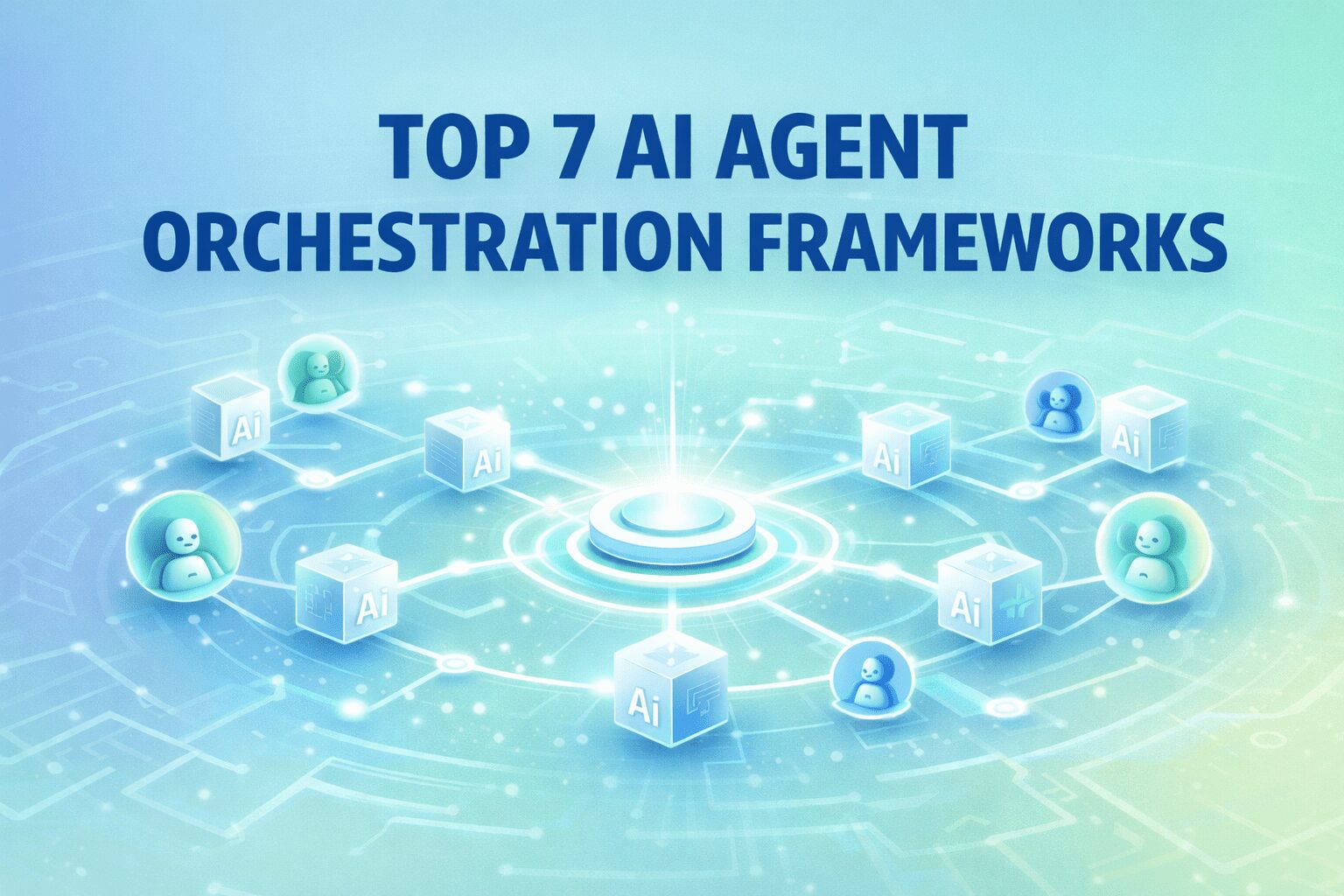
AI agents are crucial for building autonomous systems that can plan, use tools, and collaborate to solve complex problems. However, building reliable multi-agent systems requires the right orchestration framework. As an AI engineer working with agents, you need frameworks that handle the complexity of agent coordination, tool usage, and task delegation.
LangGraph: A Graph-Based Approach
LangGraph, built by the LangChain team, brings a graph-based approach to building stateful, multi-agent applications. Unlike traditional chain-based workflows, LangGraph lets you define agents as nodes in a graph with explicit state management and control flow. This framework provides explicit state management across agent interactions, making it easy to track and modify conversation state at any point.
CrewAI: A Role-Based Approach
CrewAI takes a role-based approach to agent orchestration, modeling agents as crew members with specific roles, goals, and expertise. This framework emphasizes simplicity and production readiness, making it accessible for developers new to agentic AI. CrewAI uses an intuitive approach where each agent has a defined role, backstory, and goal, making agent behavior predictable and maintainable.
Pydantic AI: Type Safety and Validation
Pydantic AI is a Python agent framework built by the Pydantic team. It’s designed around type safety and validation from the ground up, which makes it one of the most reliable frameworks for production agent systems. Pydantic AI enforces full type safety across the agent lifecycle, catching errors at write-time rather than runtime.
Google’s Agent Development Kit (ADK): Scalability and Observability
Google’s Agent Development Kit provides a comprehensive framework for building production agents with deep integration into Google Cloud services. It emphasizes scalability, observability, and enterprise-grade deployment. Google ADK offers native integration with Vertex AI, allowing the use of Gemini and other Google models with enterprise features.
AutoGen: Conversational Agent Frameworks
Developed by Microsoft Research, AutoGen focuses on conversational agent frameworks where multiple agents communicate to solve problems. It works well for applications requiring back-and-forth dialogue between agents with different capabilities. AutoGen enables creating agents with different conversation patterns and supports various conversation modes.
Semantic Kernel: Enterprise-Focused Approach
Microsoft’s Semantic Kernel takes an enterprise-focused approach to agent orchestration, integrating with Azure services while remaining cloud-agnostic. It emphasizes planning, memory management, and plugin-based extensibility. Semantic Kernel provides sophisticated planning capabilities where agents can decompose complex goals into step-by-step plans.
Conclusion and Next Steps
In conclusion, the top 7 AI agent orchestration frameworks are LangGraph, CrewAI, Pydantic AI, Google’s Agent Development Kit, AutoGen, Semantic Kernel, and Rasa. Each framework has its unique features and advantages, making them suitable for different use cases and applications. To get started with AI agent orchestration, choose a framework that aligns with your project requirements and start building autonomous systems that can plan, use tools, and collaborate to solve complex problems.
Frequently Asked Questions
- What is AI agent orchestration, and why is it important?
- How do I choose the right AI agent orchestration framework for my project?
- What are the key features of LangGraph, and how does it differ from other frameworks?
- Can I use CrewAI for building production-ready agent systems?
- How does Pydantic AI ensure type safety and validation across the agent lifecycle?