UK Cites Collective Self-Defence in Middle East Ops
The UK has cited ‘collective self-defence’ as its reasoning for responding to Iranian drone and missile attacks in the Middle East. This comes after a joint US-Israeli bombing campaign over Iran, which began on 28 February.
UK Air Assets on Patrol
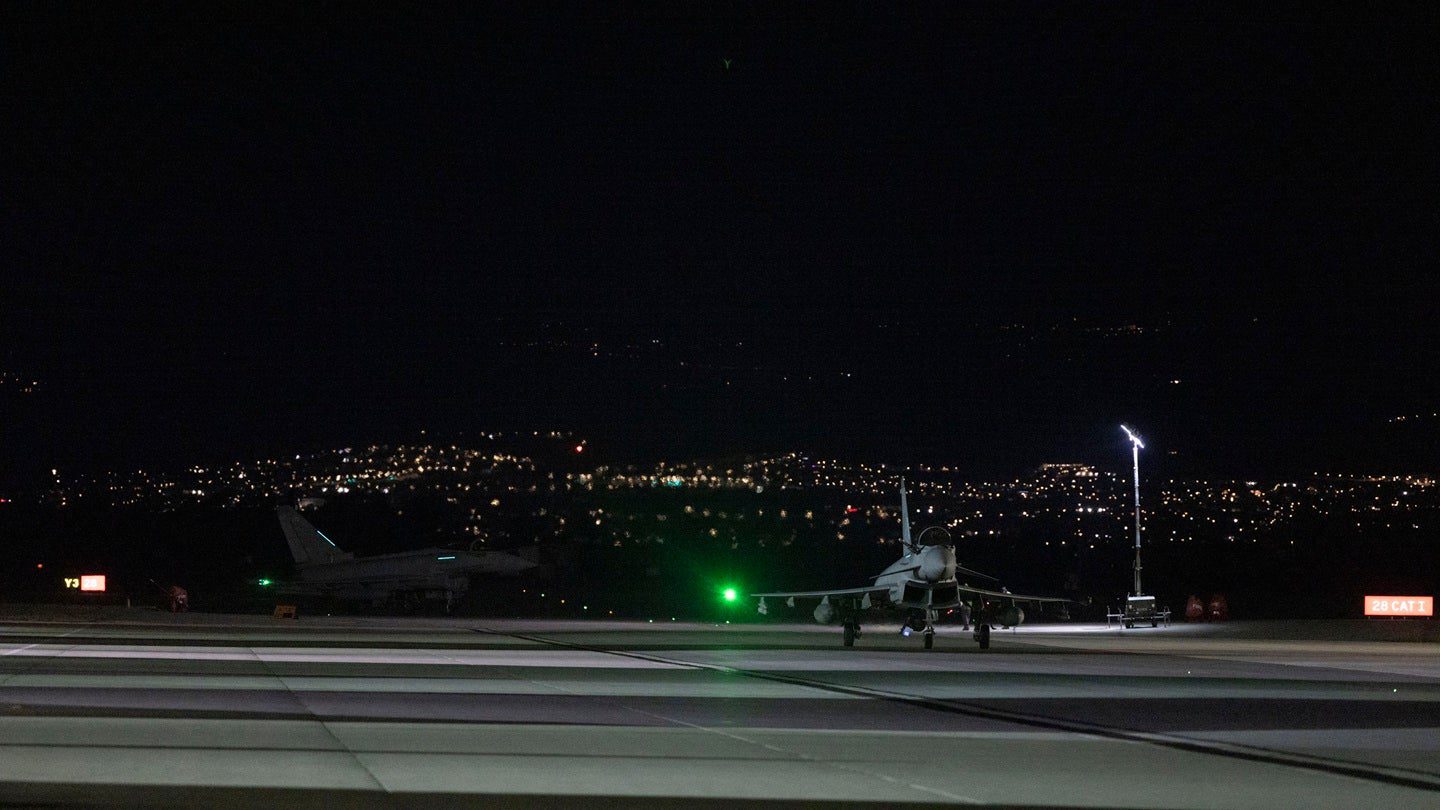
UK air assets are on patrol in the Middle East, with Royal Air Force Typhoon aircraft tasked with securing key UK military sites in the region. On 1 March, an RAF Typhoon intercepted an Iranian drone heading for Qatar, shooting it down with an air-to-air missile.
Meanwhile, residents in Dubai have reported hearing ‘loud thumps’ from inbound strikes, with air raid sirens not active across the city. The UK military is on high alert, with personnel reportedly within ‘a few hundred yards’ of strikes.
UK Military Installations Vulnerable
The UK maintains a small network of military installations across the region, including the Naval Support Facility in Bahrain and the British Army training centre in Oman. Reports have circulated that a UK military counter-UAS team downed an Iranian drone heading for a coalition base in Iraq.
The UK Government has opted not to participate in the US-Israeli strikes but has agreed to US requests to allow its air bases to be used to support them. This includes assets based in Cyprus and the Diego Garcia site in the Indian Ocean.
For example, the UK’s decision to provide air cover for Qatar is a key aspect of its collective self-defence strategy. Additionally, the use of air-to-air missiles to shoot down Iranian drones is a crucial component of the UK’s defence capabilities.
Therefore, the situation in the Middle East remains complex and volatile, with the UK playing a crucial role in maintaining regional stability. However, the UK’s commitment to collective self-defence is clear, and its military assets are ready to respond to any further threats.
Finally, the UK’s actions in the Middle East demonstrate its commitment to protecting its interests and personnel in the region. The use of collective self-defence as a reasoning for its response is a key aspect of its strategy, and it will be important to monitor the situation closely in the coming days.
Conclusion
In conclusion, the UK’s citation of collective self-defence in its response to Iranian drone and missile attacks in the Middle East is a significant development. The UK’s military assets are on high alert, and its commitment to protecting its interests and personnel in the region is clear.
However, the situation remains complex and volatile, and it will be important to monitor the situation closely in the coming days. Meanwhile, the UK’s use of air-to-air missiles to shoot down Iranian drones is a crucial component of its defence capabilities, and its decision to provide air cover for Qatar is a key aspect of its collective self-defence strategy.
For more information on the situation in the Middle East, please visit our website. Additionally, you can sign up for our daily news round-up to stay up-to-date on the latest developments.