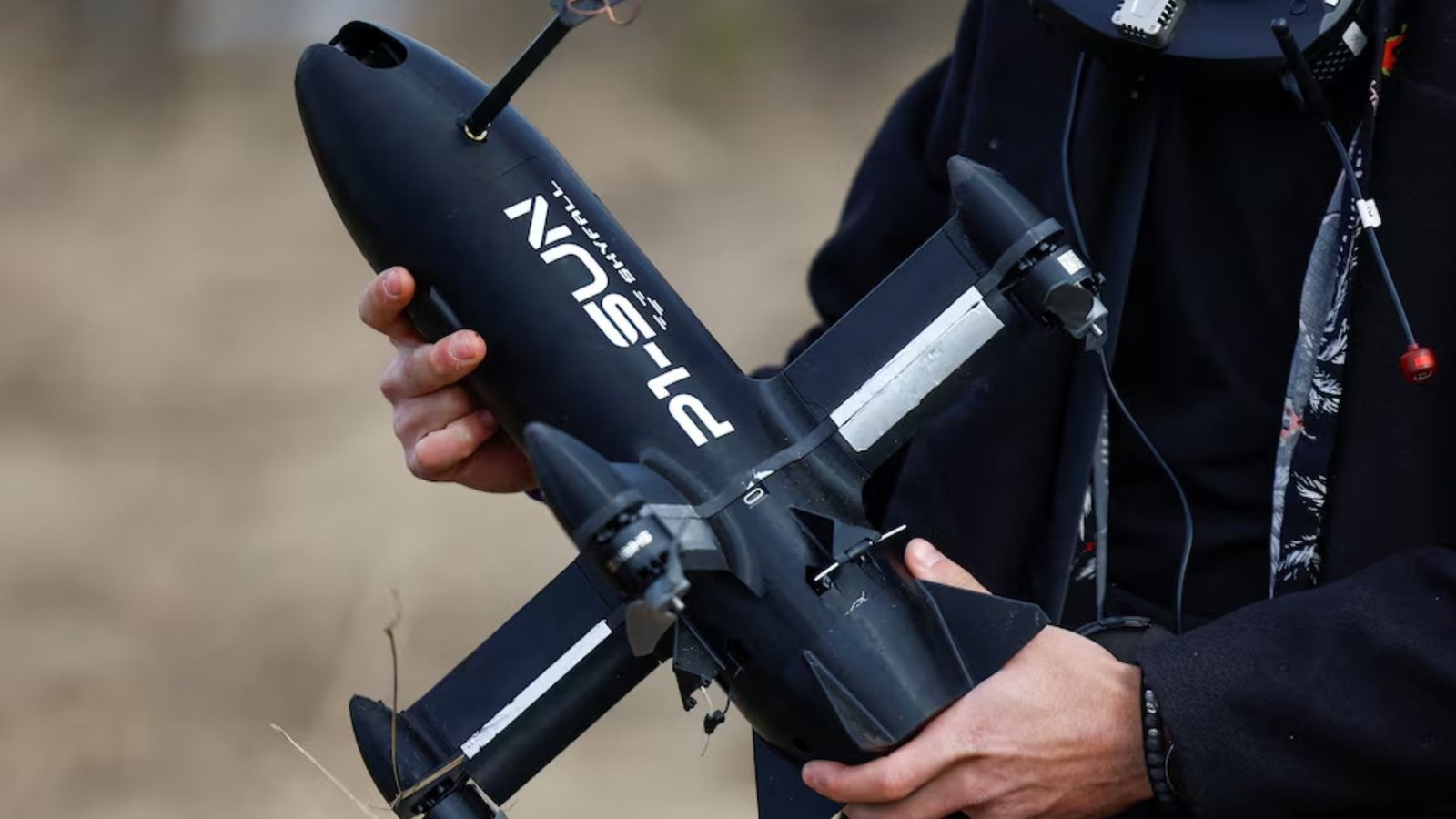
Ukraine’s $2,500 Drone Interceptors: A Game-Changer in Counter-Drone Technology
The Pentagon and several Gulf states are in talks to acquire Ukrainian-made interceptor drones to counter Iranian Shahed unmanned aerial vehicles (UAVs). This move comes after the Gulf states expended over 800 Patriot PAC-3 MSE interceptors in just three days, with each interceptor costing over $13.5 million.
Ukraine’s Combat-Proven Solution
Ukraine has developed low-cost drone-on-drone interceptor systems under sustained combat conditions. The Sting, developed by Wild Hornets, is a compact kinetic interceptor with a production cost of approximately $2,500 per unit. Meanwhile, the Merops, a fixed-wing interceptor, has recorded hit rates as high as 95% and costs roughly $15,000 per unit.
These systems can reach speeds of up to 250 km/h, comfortably faster than the Shahed, which tops out at around 185 km/h. Some use computer vision for autonomous targeting, while others rely on remote operators with manual precision for the final phase of engagement.
A Shift in the Counter-Drone Market
The broader significance of Ukraine’s emergence as a counter-drone exporter lies in what it reveals about the state of the global counter-unmanned aerial system (C-UAS) market. The existing Western air defence architecture, built around high-cost SAM interceptors, is not economically sustainable against mass drone attacks.
Ukraine’s approach offers combat-proven, mass-produced kinetic interceptors at a price point no other supplier can currently match. The production cost of $2,500 for a Sting interceptor versus over $13.5 million for a PAC-3 MSE is a ratio that cannot be ignored.