
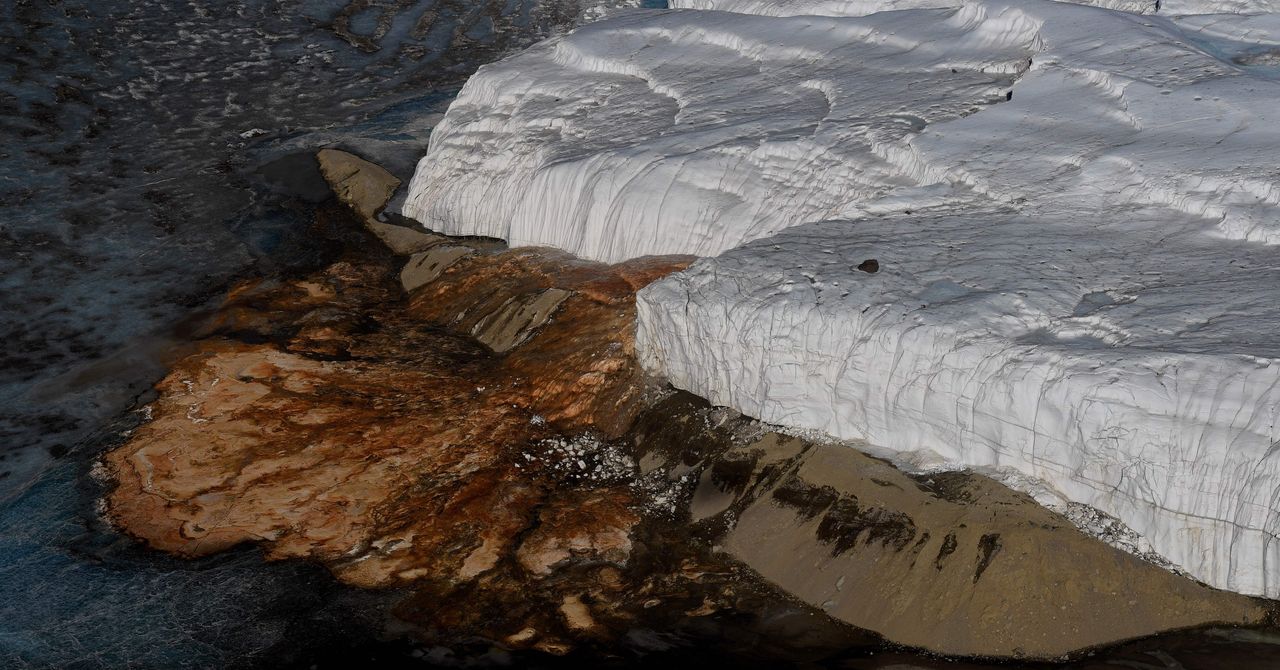
Introduction to the Blood Falls
Deep within the frozen desert of Antarctica’s McMurdo dry valleys lies a phenomenon so intriguing, it has captivated scientists for over a century. The Blood Falls, a periodic gush of reddish water onto the Taylor Glacier, has been a subject of fascination since its discovery by geologist Thomas Griffith Taylor in 1911. This natural wonder has sparked a multitude of scientific speculations, with recent research finally shedding light on the mysteries surrounding its existence.
The Science Behind the Blood Falls
The origin of the Blood Falls’ reddish hue was initially attributed to the presence of red microalgae. However, more recent studies have revealed that the color is actually due to iron particles trapped in nanospheres, combined with elements such as silicon, calcium, aluminum, and sodium. These particles are believed to have been produced by ancient bacteria that were trapped underground, which, upon coming into contact with air, oxidize and impart the characteristic rust color to the mixture.
The presence of liquid water in this frozen landscape is also a result of a hypersaline brine, formed approximately 2 million years ago when the waters of the Antarctic Ocean receded from the valleys. The high salinity of this brine prevents the water from freezing, allowing it to periodically erupt from the glacier.
Unraveling the Mystery of the Eruptions
While the puzzle of the Blood Falls’ color and liquid state has been solved, the question remained as to what drives the fluid to erupt. Recent research, published in the journal Antarctic Science, has provided the final piece to this puzzle. By cross-referencing GPS data, thermal sensors, and high-resolution images collected during an eruption in 2018, scientists have discovered that the Blood Falls are a result of pressure variations affecting the brine deposits beneath the glacier.
As the Taylor Glacier moves downstream, the overlying ice mass compresses the subglacial channels, building up tremendous pressure. When this pressure becomes unbearable, the ice gives way, allowing pressurized brine to seep into the crevices and be shot out in short bursts. Interestingly, this release acts as a hydraulic brake, temporarily slowing the glacier’s march.
Implications and Future Concerns
With the mysteries of the Blood Falls now solved, attention turns to the impact of global warming on this complex system. As the planet continues to warm, the effects on the delicate balance of Antarctica’s glaciers and the brine deposits they overlay are unknown. Understanding these phenomena is crucial not only for the preservation of these natural wonders but also for the broader implications on global climate patterns.
Conclusion and Call to Action
The Blood Falls of Antarctica are a testament to the awe-inspiring and often mysterious natural world that surrounds us. Through dedication and innovative research, scientists have unraveled the secrets behind this phenomenon, contributing to our understanding of Earth’s complex systems. As we move forward, it is imperative that we continue to support scientific inquiry and take action to protect these unique environments, ensuring their preservation for future generations.
Frequently Asked Questions
- What are the Blood Falls? The Blood Falls are a natural phenomenon in Antarctica where reddish water periodically erupts from the Taylor Glacier.
- Why are the Blood Falls red? The red color is due to iron particles trapped in nanospheres, which oxidize when they come into contact with air.
- What causes the Blood Falls to erupt? The eruptions are caused by pressure variations affecting the brine deposits beneath the glacier, which build up as the glacier moves and then release in bursts.
- How does the brine remain liquid in freezing temperatures? The high salinity of the brine prevents it from freezing, allowing it to remain liquid and erupt periodically.
- What are the implications of global warming on the Blood Falls? The impact of global warming on the Blood Falls and similar systems is currently unknown but is an area of concern and ongoing research.








