Introduction to Planetary Formation
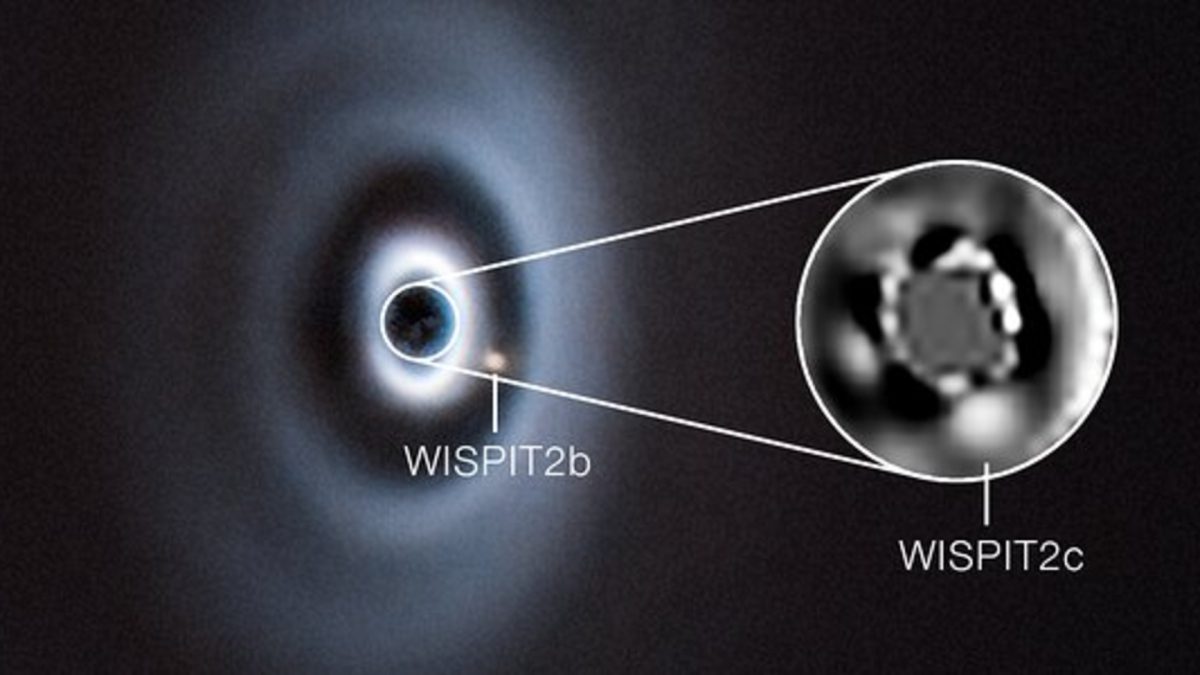
The discovery of the WISPIT 2 system has provided a unique glimpse into the formation of complex planetary systems like our own. Recently, astronomers have detected a second protoplanet, WISPIT 2c, in the system, offering valuable insights into the mechanisms of planetary formation.
Understanding the WISPIT 2 System
The WISPIT 2 system, located in a distant star system, is home to a protoplanetary disc of rocks and gas. The detection of WISPIT 2b, the first protoplanet, was a significant achievement, and the discovery of WISPIT 2c has further expanded our understanding of the system. The two protoplanets are believed to be forming through the accumulation of gas and dust in the disc.
For example, the WISPIT 2 system’s disc is thought to be similar to the solar nebula that formed our own solar system. By studying this system, astronomers can gain a better understanding of the processes that shaped the formation of our own planets.
Key Features of the WISPIT 2 System
The WISPIT 2 system has several notable features that make it an ideal candidate for studying planetary formation. These include:
- A large protoplanetary disc with multiple grooves, indicating the presence of forming planets.
- Two confirmed protoplanets, WISPIT 2b and WISPIT 2c, with different masses and orbital distances.
- A unique opportunity to study the interactions between multiple forming planets and the disc.
Implications for Our Understanding of Planetary Formation
The discovery of the WISPIT 2 system has significant implications for our understanding of planetary formation. By studying this system, astronomers can gain insights into the mechanisms that shape the formation of complex planetary systems like our own.
For instance, the WISPIT 2 system can help us understand why our own planets have such different compositions. Additionally, studying the formation of gas giants like Jupiter can provide valuable insights into the early stages of planetary formation.
Future Research Directions
Future research directions for the WISPIT 2 system include:
- Continued monitoring of the system to detect additional protoplanets.
- High-resolution imaging of the disc to study the formation of planets in greater detail.
- Comparative studies with other planetary systems to identify commonalities and differences.
Meanwhile, the study of the WISPIT 2 system is an ongoing process, with new discoveries and insights emerging regularly. Therefore, it is essential to continue monitoring the system and analyzing the data to gain a deeper understanding of planetary formation.
Conclusion
In conclusion, the WISPIT 2 system offers a unique glimpse into the formation of complex planetary systems like our own. The discovery of WISPIT 2c, the second protoplanet in the system, has provided valuable insights into the mechanisms of planetary formation. As we continue to study this system, we can gain a better understanding of the processes that shaped the formation of our own planets and the solar system as a whole.