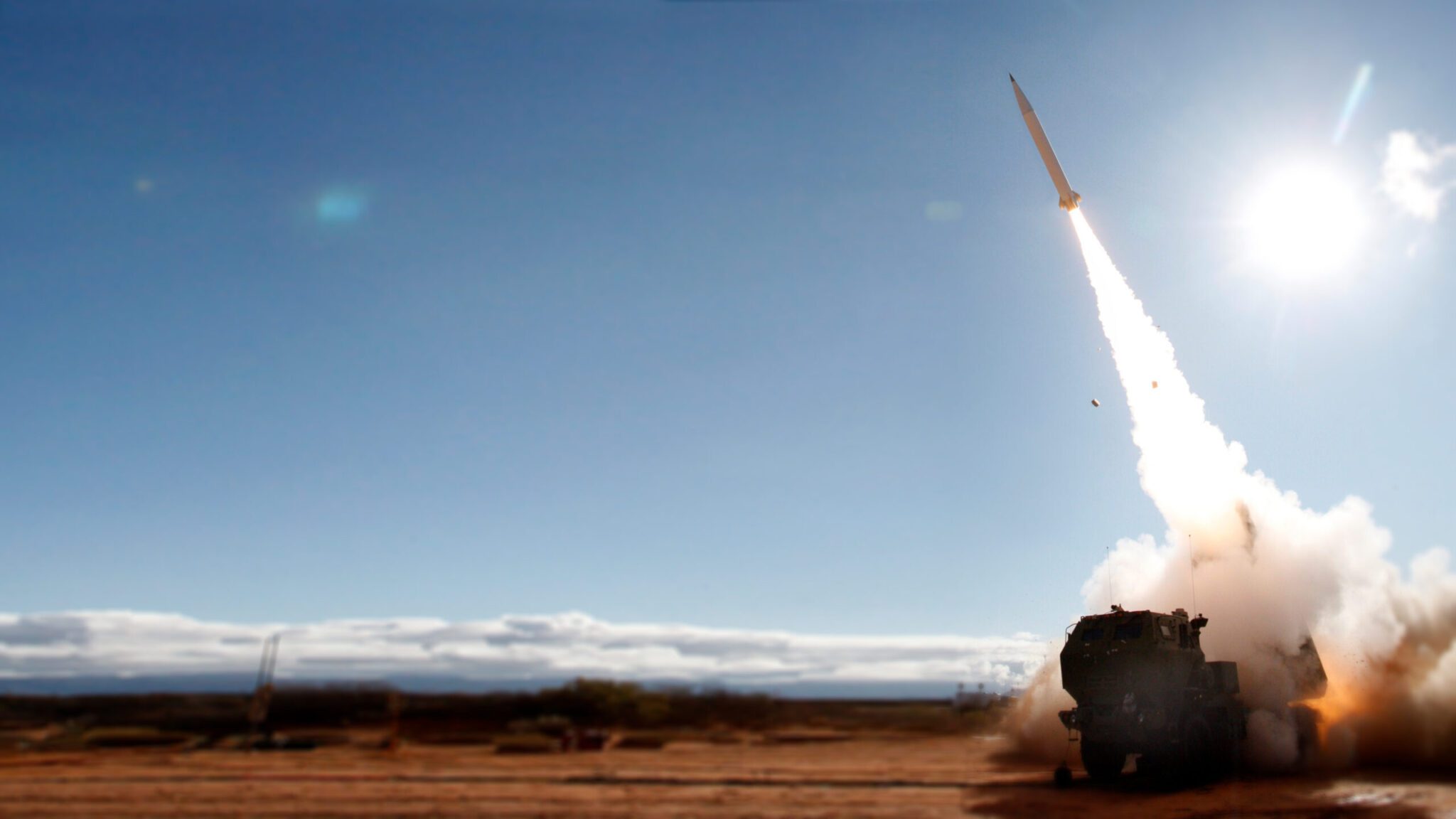
Introduction to Precision Strike Missiles
The US Army has made history by deploying Lockheed Martin-made Precision Strike Missiles (PrSMs) in combat for the first time.
Meanwhile, this development marks a significant milestone in the Army’s efforts to enhance its deep strike capabilities.
Additionally, the PrSMs were used during Operation Epic Fury, providing an unrivaled deep strike capability.
Key Features of Precision Strike Missiles
The PrSMs are part of the PrSM Increment 1 program, which was created to replace Lockheed’s MGM-140 Army Tactical Missile System (ATACMS).
Furthermore, the missiles are capable of hitting targets at least 500 kilometers away.
However, future versions of the PrSM, including Increment 2 and Increment 3, are expected to have enhanced capabilities, such as a multimode seeker and enhanced lethality payloads.
Future Developments and Competing Designs
The Army has tapped a Lockheed Martin team and a Raytheon Technologies-Northrop Grumman team to work on competing PrSM Increment 4 designs.
Therefore, these designs are expected to have a range of more than 1,000 km, double the range of the current version.
For example, the Army is also looking for a fifth version of the PrSM that can fly more than 1,000 km and fire from an autonomous launcher.
Conclusion and Future Prospects
In conclusion, the deployment of Precision Strike Missiles in combat marks a significant development in the US Army’s efforts to enhance its deep strike capabilities.
Finally, as the Army continues to develop and deploy new versions of the PrSM, it is likely to have a significant impact on the future of warfare.