
US Pursues Innovative Solutions to Counter Iranian Drone Swarms
The United States is actively seeking low-cost drone interceptors and laser weapons to counter the Iranian Shahed-136 drone swarms. This move comes as a response to the cost-exchange problem created by Iran’s use of low-cost unmanned systems against high-value air defence assets.
Interceptor Drones: A Promising Solution
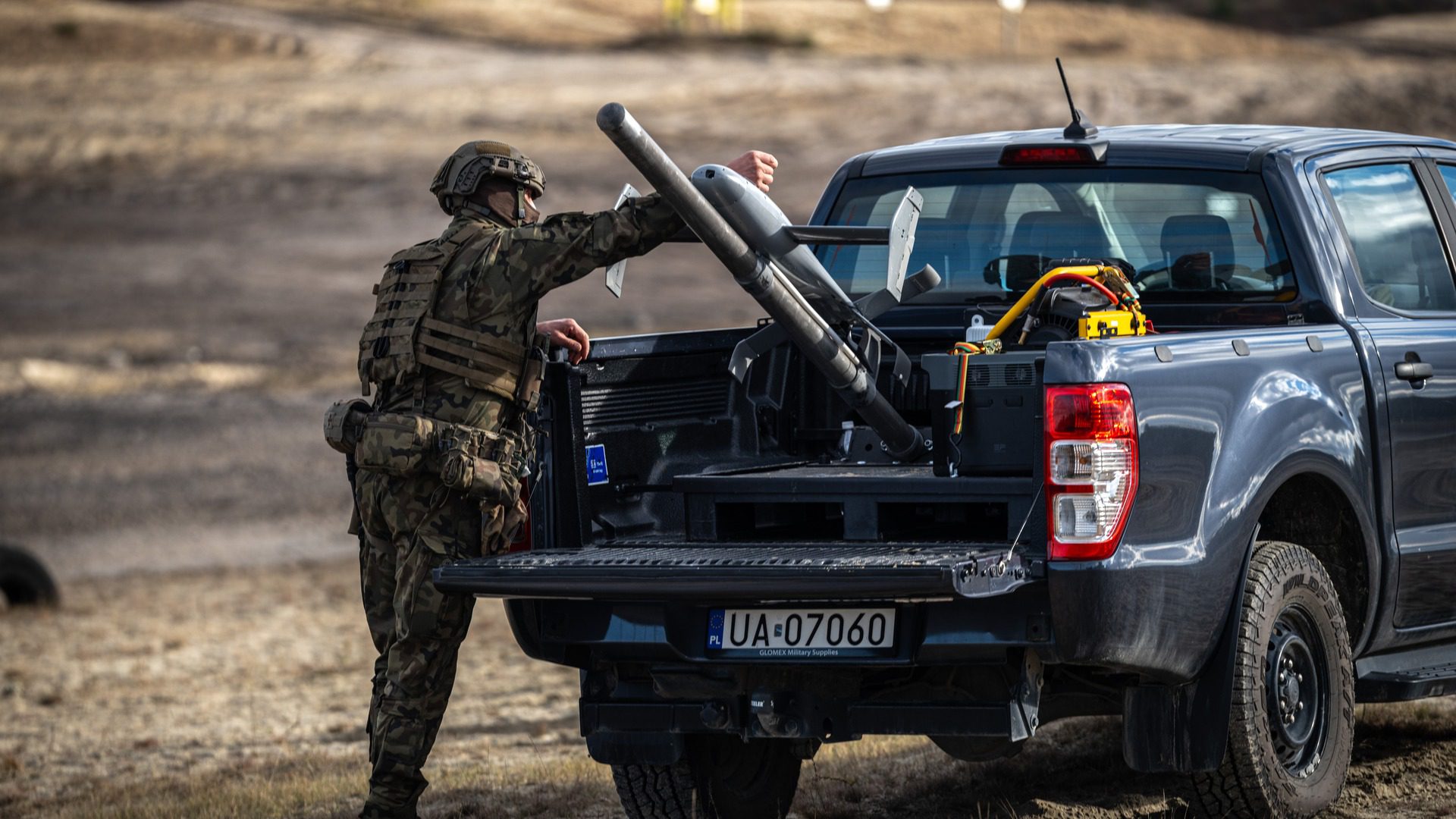
US and Gulf state officials are exploring two distinct interceptor drone programs to address the Shahed threat. The first is Ukraine’s Wild Hornets ‘Sting’ quadcopter, which has reportedly achieved high interception rates against Shahed-136 drones. The second program is Merops, a fixed-wing interceptor drone developed under Project Eagle, which has been battle-tested in Ukraine with hit rates as high as 95%.
These interceptor drones offer a cost-effective solution, with the Merops system costing approximately $15,000 per unit, compared to the $13.5 million Patriot PAC-3 missiles currently being used. This significant cost difference makes the interceptor drones an attractive option for preserving Patriot stocks for higher-tier ballistic missile threats.
Directed-Energy Weapons: A Long-Term Solution
The US Navy is also deploying shipborne laser systems to engage Iranian drones as part of a broader counter-unmanned aerial system (C-UAS) effort. While current laser systems are limited in power output and effective range, they offer near-zero marginal cost per engagement and theoretically unlimited magazines, making them an ideal counter to swarm tactics.
However, the current deployments are seen as operational testing under combat conditions rather than a scaled capability. The development of directed-energy weapons is a longer-term play, and their effectiveness will depend on overcoming technical challenges and integrating them into a comprehensive C-UAS architecture.








