
US Financial Regulators Unite to Tackle Digital Asset Oversight
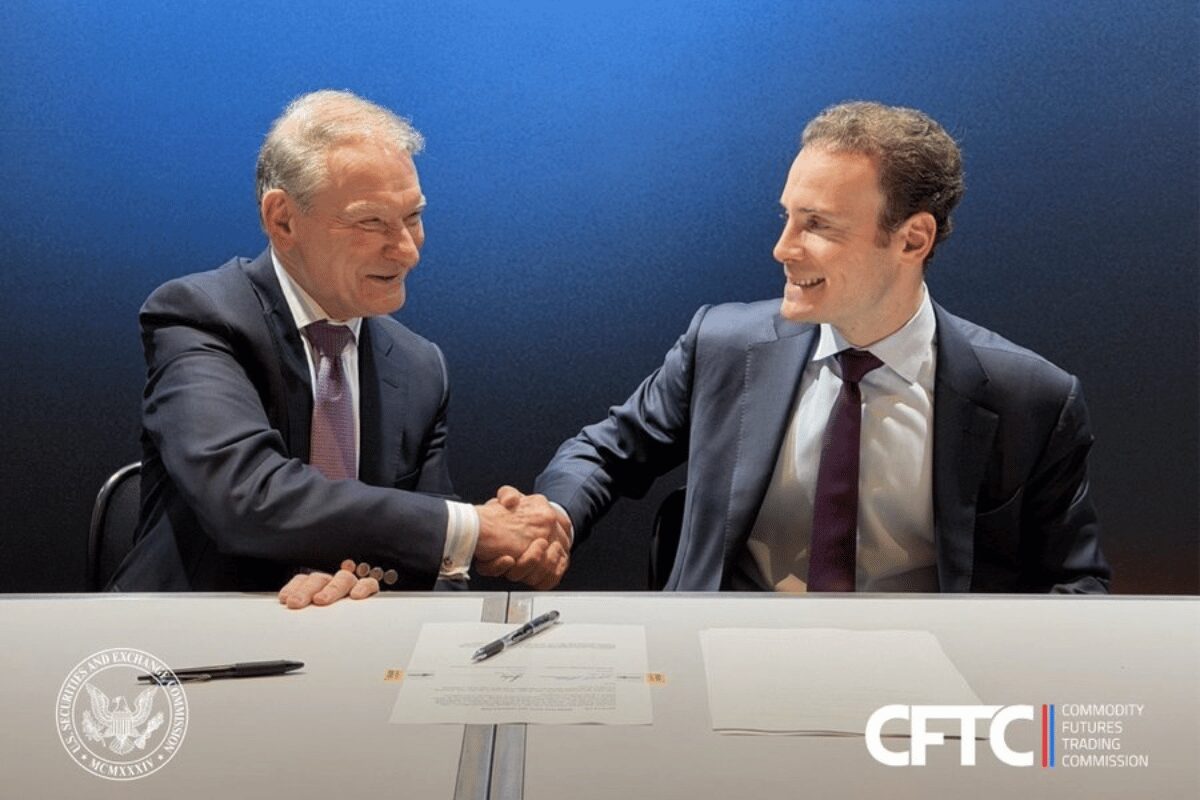
The Commodity Futures Trading Commission (CFTC) and the US Securities and Exchange Commission (SEC) have announced a new memorandum of understanding to coordinate their supervision of markets that increasingly overlap. This move reflects the reality that crypto infrastructure, tokenized assets, and prediction markets often blur the distinction between securities and derivatives.
Streamlining Rulemaking and Regulatory Definitions
The updated framework is intended to streamline rulemaking, clarify regulatory definitions, and coordinate supervision of firms whose activities fall under both agencies. Regulators say the goal is to cut down on duplicate oversight while still addressing new financial products that do not fit neatly into existing legal categories.
Michael S. Selig, chairman of the CFTC, framed the agreement as part of a wider effort to update regulatory structures as technology reshapes financial markets. “America’s financial markets are the envy of the world because they scale and adapt to meet investor demands. Like our markets, the CFTC’s and SEC’s regulatory frameworks must also evolve and modernize to accommodate the needs of our market participants,” Selig said.
Reducing Friction for Market Participants
Under the memorandum, the agencies will formally coordinate on definitions, enforcement priorities, and market supervision when trading products intersect both securities and derivatives law. Regulators say closer alignment should make compliance easier for firms operating across multiple financial sectors.
Selig said the partnership is intended to reduce friction for market participants while strengthening oversight. “This Memorandum of Understanding solidifies the agencies’ commitment to harmonize regulatory frameworks to provide comprehensive and seamless financial market oversight. By working together, we’ll eliminate duplicative, burdensome rules and close gaps in regulation for the benefit of all Americans and usher in a Golden Age of American finance,” he said.
CFTC and SEC Grapple with Expanding Crypto and Prediction Markets
The agreement arrives as regulators increasingly focus on blockchain-based trading platforms and event-contract markets that allow participants to bet on real-world outcomes. Prediction markets let traders buy and sell contracts tied to events ranging from economic data releases to elections and geopolitical developments.
Because those contracts often resemble derivatives tied to future outcomes, they typically fall under the CFTC’s authority. In recent months, the agency has signaled a more open stance toward these markets. The CFTC recently issued updated guidance on how event contracts and prediction market platforms should operate under derivatives rules, while also withdrawing a previously proposed ban on certain types of event contracts that critics said would have restricted market development.
Supporting Innovation in US Financial Markets
SEC Chairman Paul S. Atkins said the new agreement is designed to reduce long-standing regulatory friction between the agencies. “For decades, regulatory turf wars, duplicative agency registrations, and different sets of regulations between the SEC and CFTC have stifled innovation and pushed market participants to other jurisdictions,” Atkins said.
He said the new framework is meant to provide clearer guidance for market participants and support innovation in US financial markets. “This updated Memorandum of Understanding will serve as a roadmap for a new era of harmonization between the agencies – one that is critical to support US leadership in this next chapter of financial innovation,” Atkins said.
Meanwhile, the rapid growth of crypto trading venues has complicated oversight. Many platforms now offer products that look like securities in some contexts and derivatives in others, creating jurisdictional overlap between regulators.
However, the new agreement is a significant step towards reducing this friction and supporting innovation in US financial markets. By working together, the CFTC and SEC can provide clearer guidance for market participants and help to usher in a new era of financial innovation.
Conclusion
In conclusion, the new memorandum of understanding between the CFTC and SEC is a significant step towards reducing regulatory friction and supporting innovation in US financial markets. By working together, the agencies can provide clearer guidance for market participants and help to usher in a new era of financial innovation.
Therefore, market participants can expect a more streamlined and coordinated approach to regulation, which should reduce friction and support growth in the industry. Additionally, the agreement is a positive step towards reducing the complexity and uncertainty that has characterized the regulatory landscape in recent years.
Finally, the new agreement is a significant development for the US financial markets, and market participants should take note of the changes and opportunities that it presents. By understanding the implications of the agreement, market participants can better navigate the regulatory landscape and take advantage of the opportunities that it presents.
Frequently Asked Questions
Q: What is the purpose of the new memorandum of understanding between the CFTC and SEC?
A: The purpose of the new memorandum of understanding is to coordinate the supervision of markets that increasingly overlap and to provide clearer guidance for market participants.
Q: How will the new agreement affect market participants?
A: The new agreement is expected to reduce friction for market participants by providing clearer guidance and a more streamlined approach to regulation.
Q: What types of markets will be affected by the new agreement?
A: The new agreement will affect markets that involve crypto infrastructure, tokenized assets, and prediction markets, which often blur the distinction between securities and derivatives.
Q: How will the new agreement support innovation in US financial markets?
A: The new agreement will support innovation in US financial markets by providing clearer guidance for market participants and reducing regulatory friction.
Q: What is the expected outcome of the new agreement?
A: The expected outcome of the new agreement is a more streamlined and coordinated approach to regulation, which should reduce friction and support growth in the industry.








