Introduction
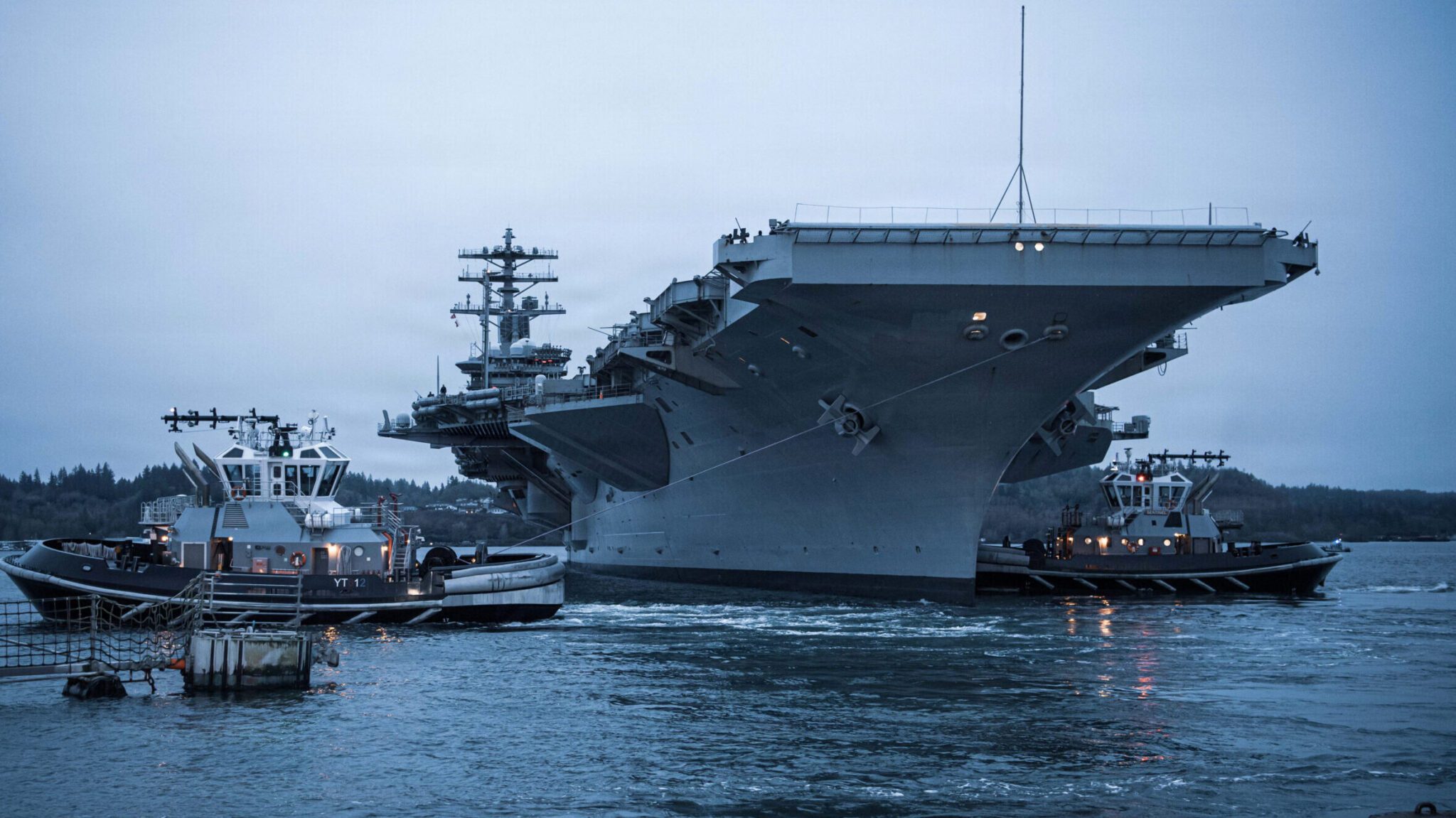
The U.S. Navy has announced a critical decision to extend the service life of the USS Nimitz (CVN 68) until March 2027. This move, revealed in late March 2026, delays the carrier’s decommissioning by nearly a year. The Nimitz, the oldest active aircraft carrier in the fleet, is currently en route to Naval Station Norfolk, Virginia, after departing its homeport in Bremerton, Washington. This update reflects the Navy’s broader strategy to maintain operational readiness amid delays in new carrier construction.
Why the Navy Extended the USS Nimitz’s Service Life
Maintaining Fleet Size
By prolonging the Nimitz’s active duty, the Navy ensures it retains its full complement of 11 aircraft carriers. This is vital as the second Ford-class carrier, the John F. Kennedy, is not expected to join the fleet until March 2027. The extension bridges the gap between the Nimitz’s retirement and the Kennedy’s arrival, preserving operational capacity.
Operational Demands
The Nimitz recently completed a nine-month deployment, supporting missions across the Indo-Pacific, Central Command, and even Africa. During this time, the carrier conducted 8,500 sorties and logged 17,000 flight hours. Its extended service life allows the Navy to meet ongoing global commitments without overextending other assets.
Homeport Shift and Decommissioning Plans
The Nimitz’s journey to Norfolk marks the start of its final phase. Once there, the ship will undergo inactivation and reactor defueling at Huntington Ingalls Industries (HII) in Newport News. This process is part of the Navy’s first-ever dismantling of a nuclear-powered carrier, a complex operation requiring meticulous planning.
Key Milestones
- March 2026: Final departure from Bremerton, Washington.
- 2027: Scheduled decommissioning after defueling and inactivation.
- March 2027: Delivery of the John F. Kennedy, the next Ford-class carrier.
Strategic Implications for the Navy
Operational Flexibility
The extension provides the Navy with additional time to balance carrier operations with other priorities. For example, the Nimitz’s recent support of strikes against ISIS in Somalia highlights its role in multi-theater operations. Keeping the carrier active ensures the fleet can respond to emerging threats without gaps in coverage.
Cost and Resource Management
Delaying the Nimitz’s decommissioning also buys the Navy time to allocate resources efficiently. The defueling process, which involves safely removing the ship’s nuclear reactor, is both time-consuming and costly. Extending the carrier’s service life allows for better coordination of these efforts.
Conclusion and Call to Action
The USS Nimitz’s extended service life underscores the Navy’s commitment to adaptability in a rapidly evolving strategic landscape. As the carrier transitions to its final phase, its legacy of service remains a cornerstone of U.S. maritime power. For more updates on naval operations and fleet modernization, follow our blog and subscribe to our newsletter.