Vine-Inspired Robot Fingers: A New Era in Gentle Robotics
In the world of robotics, researchers are constantly seeking innovative solutions to improve the way machines interact with their environment. Inspired by the twisted, woody tendrils of vines, engineers at MIT and Stanford University have developed a robotic gripper that can snake around and lift a variety of objects, including people, with unprecedented gentleness.
The Science Behind Vine-Inspired Robotics
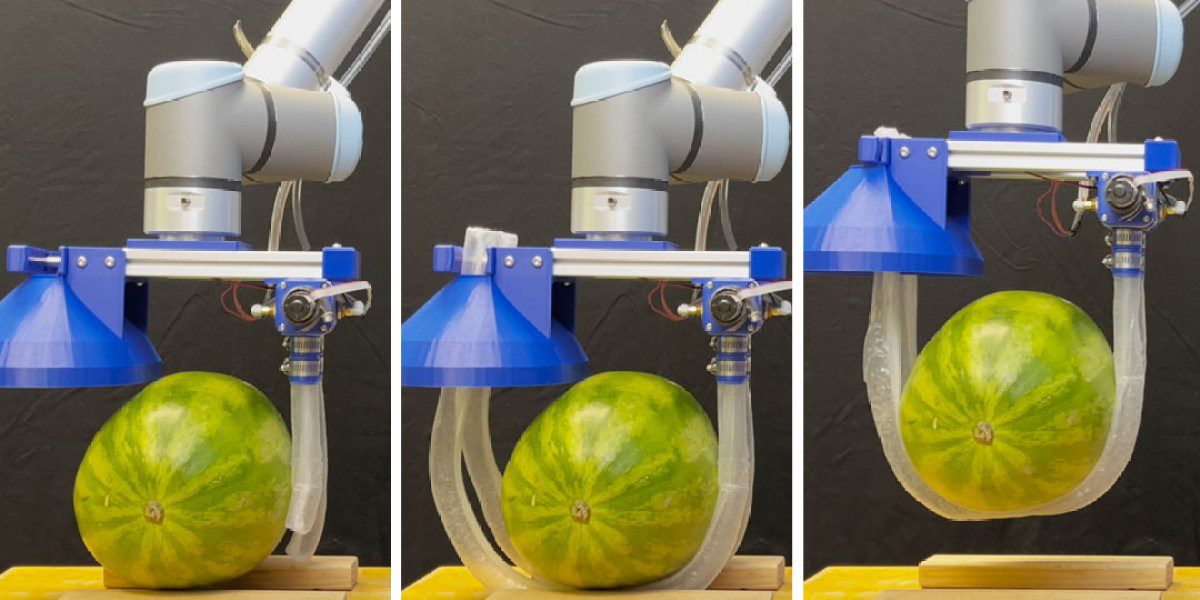
The new bot features a pressurized box from which long, vine-like tubes inflate and grow, twisting and coiling around objects before being clamped in place and mechanically wound back up to gently lift them. This unique design combines open-loop and closed-loop actions, allowing the robot to grow and twist around an object, then transform into a closed loop to lift it.
Applications in Eldercare and Beyond
The researchers envision a range of applications, from agricultural harvesting to loading and unloading heavy cargo. In the near term, they are exploring uses in eldercare, such as safely lifting patients out of bed. This task is often physically strenuous for caregivers, but the robotic system can relieve them and provide a more comfortable experience for the patient.
The key to the system’s success lies in its ability to transform between open and closed loops, achieving new levels of performance by leveraging the advantages of both forms. This design can be adapted to various grasping tasks, including sorting warehouse products, unloading heavy cargo, or helping lift patients out of bed.
Real-World Implications and Future Applications
The team’s design has been initially motivated by challenges in eldercare, but its potential extends to other industries, such as manufacturing and logistics. A smaller version of the robot has been attached to a commercial robotic arm, successfully lifting a variety of heavy and fragile objects, including a watermelon, a glass vase, and a kettlebell.
The vines can also navigate through cluttered bins to retrieve a desired object, demonstrating the robot’s versatility and ability to adapt to different environments. As researchers continue to explore and develop this technology, we can expect to see its applications expand into areas such as heavy industry, automating the operation of cranes at ports and warehouses.
Conclusion and Future Prospects
In conclusion, the vine-inspired robot fingers represent a significant breakthrough in robotics, offering a gentler and more efficient approach to grasping and lifting objects. With its potential to revolutionize various industries, from eldercare to manufacturing, this technology has the potential to make a lasting impact on our daily lives.
As we look to the future, it will be exciting to see how this technology continues to evolve and improve, enabling robots to interact with their environment in a more natural and human-like way. With the vine-inspired robot fingers, we are one step closer to creating a new generation of robots that can safely and efficiently interact with humans and their environment.
Frequently Asked Questions
Q: What inspired the development of the vine-inspired robot fingers?
A: The researchers were inspired by the twisted, woody tendrils of vines and their ability to grow and twist around objects.
Q: What are the potential applications of the vine-inspired robot fingers?
A: The potential applications include eldercare, manufacturing, logistics, and heavy industry, among others.
Q: How does the vine-inspired robot fingers work?
A: The robot features a pressurized box from which long, vine-like tubes inflate and grow, twisting and coiling around objects before being clamped in place and mechanically wound back up to gently lift them.
Q: What are the benefits of using the vine-inspired robot fingers in eldercare?
A: The robotic system can relieve caregivers and provide a more comfortable experience for patients, making it an attractive solution for eldercare.
Q: Can the vine-inspired robot fingers be adapted to other industries?
A: Yes, the design can be adapted to various industries, including manufacturing, logistics, and heavy industry, among others.