Introduction to Virtual Photons and Superconductivity
Researchers have made a groundbreaking discovery about the influence of virtual photons on superconductivity. Virtual photons, which are particles of light that aren’t actually present, can affect the behavior of a superconductor. This finding has significant implications for our understanding of quantum mechanics and superconductivity.
Understanding Virtual Photons
Virtual photons are a consequence of quantum field theory, which states that even empty space is filled with fields that govern the interactions of quantum objects. These particles can transmit the electromagnetic force between particles, even when no real photons are present. The presence of virtual photons can be detected by their effects on the behavior of materials.
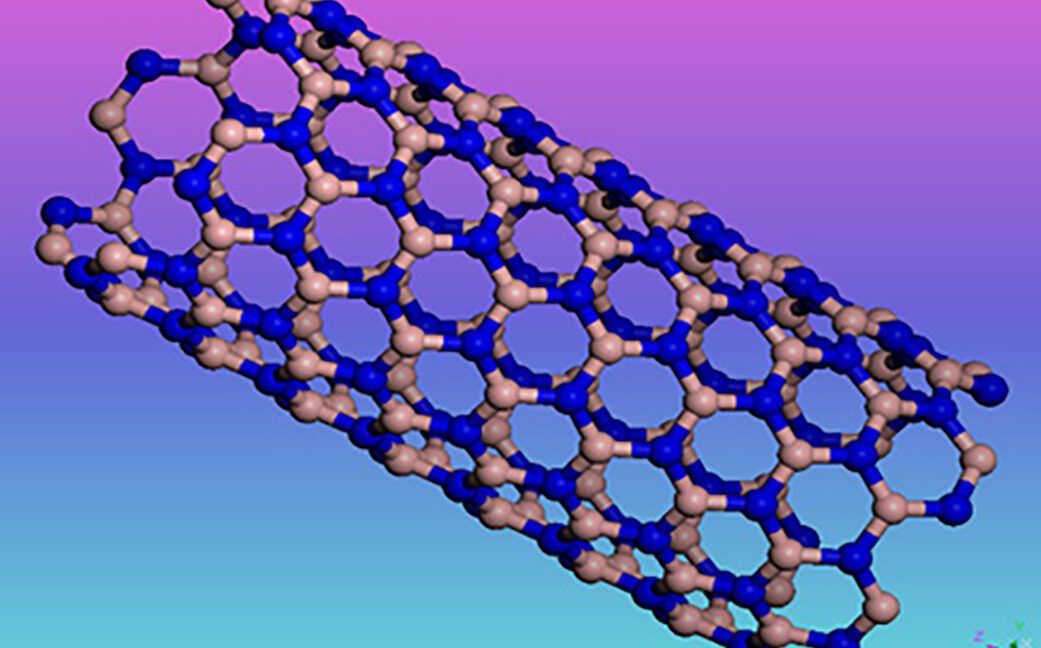
One material that exhibits this property is boron nitride, which forms a series of interlinked hexagonal rings. This structure allows certain wavelengths of light to transit smoothly, creating a distinct electromagnetic field. As a result, virtual photons are present in the material, even when no real photons are around.
Experimenting with Superconductivity
Researchers used a superconductor called κ-(BEDT-TTF)2Cu[N(CN)2]Br (κ-ET) to test the influence of virtual photons on superconductivity. They layered boron nitride on top of the superconductor and found that the presence of boron nitride reduced the force needed to bring a magnet closer to the superconductor. This suggests that the virtual photons in the boron nitride are interacting with the superconductor, suppressing its superconductivity.
The experiment demonstrated that the interaction between the superconductor and boron nitride is specific and not due to other materials. The researchers also found that the suppression of superconductivity occurs when there are no real photons transiting through the boron nitride, highlighting the role of virtual photons.
Implications and Future Directions
The discovery of virtual photons influencing superconductivity has significant implications for our understanding of quantum mechanics and superconductivity. It suggests that there are alternative ways to manipulate superconductivity beyond changing the material’s chemistry or using temperature and pressure. The use of boron nitride as a probe to characterize superconductors could lead to the development of new materials with unique properties.
Furthermore, this research validates the idea that superconductivity can be manipulated in ways beyond the traditional methods. The potential to develop new superconductors with higher critical temperatures or more efficient properties is an exciting prospect. As researchers continue to explore the properties of virtual photons and their influence on superconductivity, we may uncover new and innovative ways to harness the power of superconductors.
Conclusion
In conclusion, the discovery of virtual photons influencing superconductivity is a significant breakthrough in our understanding of quantum mechanics and superconductivity. The use of boron nitride as a probe to characterize superconductors has opened up new avenues for research and potential applications. As we continue to explore the properties of virtual photons and their influence on superconductivity, we may uncover new and innovative ways to harness the power of superconductors.
For more information on this topic, please refer to the following FAQs:
- What are virtual photons, and how do they influence superconductivity?
- How does boron nitride interact with superconductors to suppress superconductivity?
- What are the potential applications of this research in the development of new superconductors?
- How does this discovery advance our understanding of quantum mechanics and superconductivity?
- What future research directions are possible based on this discovery?