What 81,000 People Want from AI: Insights from the Largest Qualitative Study Ever Conducted
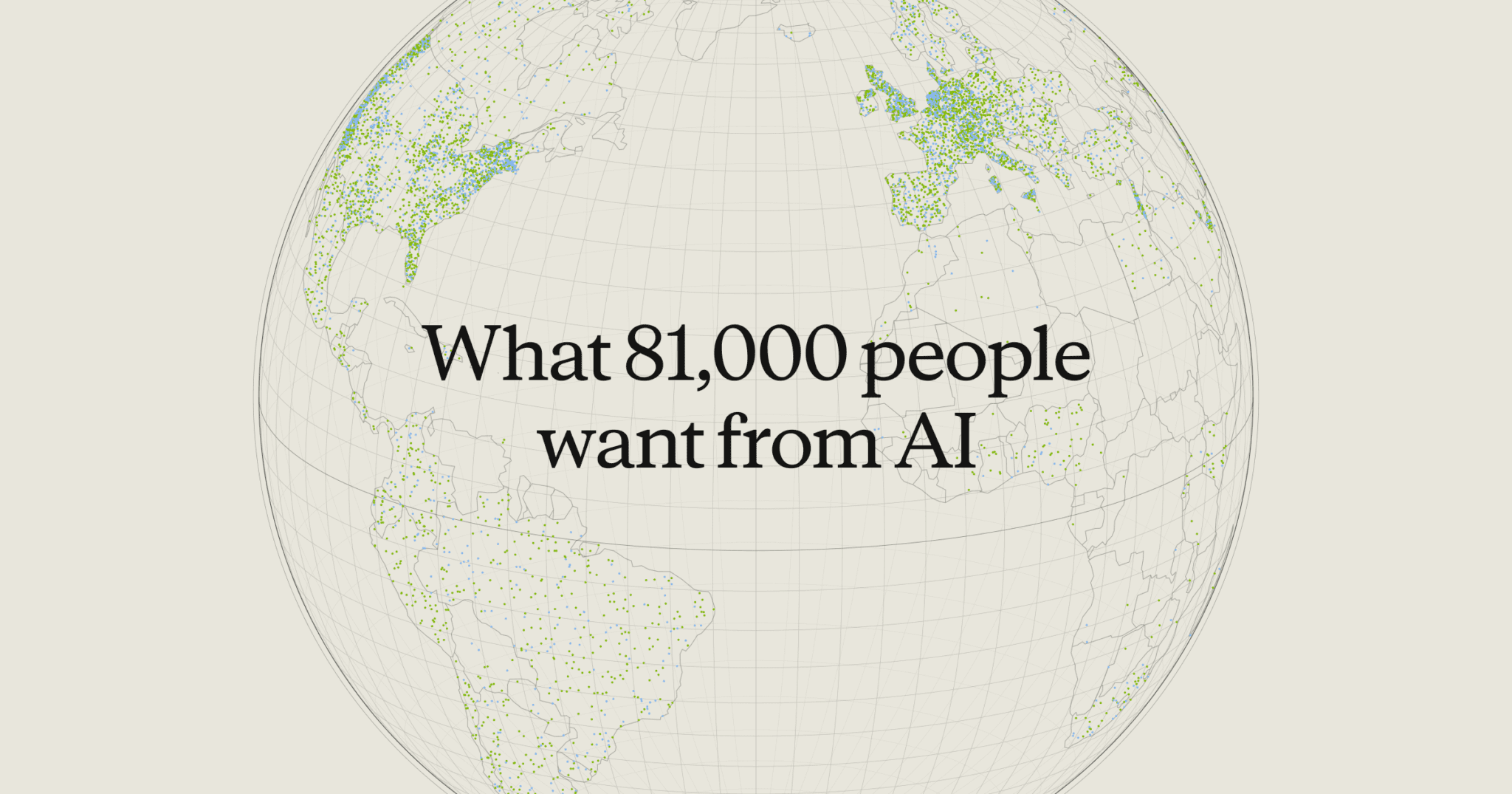
For the first time, AI has enabled us to collect rich, open-ended interviews at an extraordinary scale. We heard from people across 159 countries in 70 languages, making this the largest and most multilingual qualitative study ever conducted.
Hope and Alarm: A Complex Relationship
Cross interviews, hope and alarm didn’t divide people into camps, so much as coexist as tensions within each person. This complex relationship between hope and alarm is a crucial aspect of the public conversation about AI.
What People Want from AI
We asked Claude to identify and categorize what each person most wanted from AI. The results are fascinating and provide valuable insights into the role people want AI to play in their lives.
Professional Excellence
18.8% of respondents wanted AI to improve their professional effectiveness and help them focus on higher-value strategic work, complex problem-solving, and professional mastery.
- “I receive 100-150 text messages per day from doctors and nurses. So much of my cognitive labor was spent on documentation… Since implementing AI, the pressure of documentation has been lifted. I have more patience with nurses, more time to explain things to family members.”
- “AI modeled emotional intelligence for me… I could use those behaviors with humans and become a better person.”
Personal Transformation
13.7% of respondents wanted AI to help them achieve personal growth, emotional wellbeing, or life transformation.
- “If AI truly handled the mental load… it would give me back something priceless: undivided attention.”
- “With AI support I can now leave work on time to pick up my kids from school, feed them, and play with them.”
Life Management
13.5% of respondents wanted AI to help them manage their lives and reduce mental burden.
- “AI as comprehensive organizational support and cognitive scaffolding — e.g. managing schedules, reducing mental burden, executive function support.”
- “Relaxing while my AI gets the work done, builds the wealth. It’s a shadow of me, just a very, very long one.”
Time Freedom
11.1% of respondents wanted AI to help them reclaim time from work and chores to be present with family or friends, pursue hobbies, travel, or rest.
- “With AI support I can now leave work on time to pick up my kids from school, feed them, and play with them.”
- “I’m in a tech-disadvantaged country, and I can’t afford many failures. With AI, I’ve reached professional level in cybersecurity, UX design, marketing, and project management simultaneously.”
Financial Independence
9.7% of respondents wanted AI to help them achieve financial freedom or economic security.
- “Relaxing while my AI gets the work done, builds the wealth. It’s a shadow of me, just a very, very long one.”
- “Given my daughter’s neural disorder, she would have equal chances in the world if AI acceleration contributes to finding a cure. That’s what matters most to me.”
Societal Transformation
9.4% of respondents wanted AI to help solve major societal challenges.
- “Given my daughter’s neural disorder, she would have equal chances in the world if AI acceleration contributes to finding a cure. That’s what matters most to me.”
- “I’m in a tech-disadvantaged country, and I can’t afford many failures. With AI, I’ve reached professional level in cybersecurity, UX design, marketing, and project management simultaneously.”
Entrepreneurship
8.7% of respondents wanted AI to help them build, launch, and scale businesses.
- “I’m in a tech-disadvantaged country, and I can’t afford many failures. With AI, I’ve reached professional level in cybersecurity, UX design, marketing, and project management simultaneously.”
- “AI as comprehensive organizational support and cognitive scaffolding — e.g. managing schedules, reducing mental burden, executive function support.”
Learning & Growth
8.4% of respondents wanted AI to help them learn and grow.
- “I worked with an AI to prepare educational materials for my eldest child—asking the AI to work as both tutor and curriculum expert.”
- “AI modeled emotional intelligence for me… I could use those behaviors with humans and become a better person.”
Conclusion
The results of this study provide valuable insights into the role people want AI to play in their lives. From professional excellence to societal transformation, people have high hopes for AI. However, they also have concerns and fears about the potential risks and consequences of AI.
We hope that this study will contribute to a more nuanced and informed public conversation about AI. By understanding what people want from AI, we can work towards creating a future where AI benefits humanity as a whole.