
Why 4+ Co-Founders Can Build Billion-Dollar Companies
Google’s $32 billion acquisition of Wiz has upended startup folklore. The cybersecurity giant, founded by four co-founders, became the largest B2B acquisition in history. Meanwhile, Databricks (7 co-founders) and Anthropic (7 co-founders) have shattered valuation records. These outliers challenge the myth that fewer co-founders always equals better startups. Let’s explore how teams of 4+ can thrive—and why conventional wisdom might be wrong.
The Wiz Playbook: Four Founders, Twice
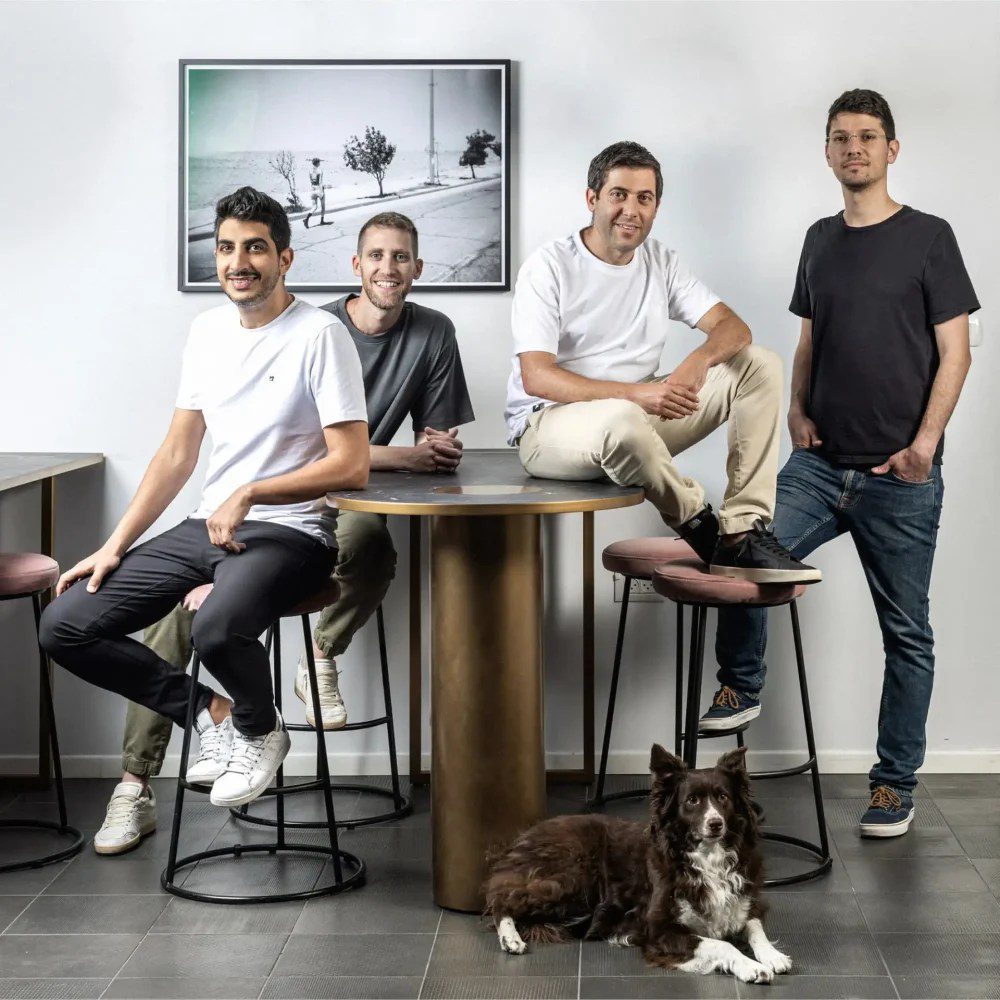
Assaf Rappaport, Yinon Costica, Ami Luttwak, and Roy Reznik didn’t just build Wiz—they built it twice. The same four founders previously sold Adallom to Microsoft for $320 million in 2015. Their secret? A decade of military collaboration in Israel’s elite Unit 8200, followed by a repeatable playbook: deep technical expertise, rapid product development, and market timing.
At Wiz, each founder owned a critical business pillar from day one—CEO, CTO, product, and R&D. This structure eliminated overlap and accelerated growth. Wiz hit $1 billion ARR in five years and $32 billion valuation in six. Four co-founders didn’t slow them down—they amplified their speed.
Other Iconic B2B Companies With 4+ Co-Founders
- Databricks (7 co-founders): Valued at $134B after its 2025 Series L round. All seven came from UC Berkeley’s AMPLab, commercializing Apache Spark.
- Anthropic (7 co-founders): $380B valuation in 2026. Founded by a team that left OpenAI, including a CEO-CTO sibling duo.
- Elastic (4 co-founders): Public company with $1.5B+ revenue. Built on Elasticsearch’s open-source foundation.
- Rubrik (4 co-founders): $17B+ market cap. Engineers from Oracle and Google scaled the company with a former VC.
Why 4+ Co-Founders Can Actually Work Better
Conventional wisdom warns of “too many cooks,” but successful teams avoid pitfalls by doing these four things:
- Pre-existing trust: Wiz’s founders served together in the military for a decade. Databricks’ team collaborated at Berkeley for years.
- Clear functional ownership: No overlapping roles. Each founder owns a distinct domain—product, engineering, sales, etc.
- Repeat partnerships: Teams that’ve built and exited companies together (like Wiz) know each other’s strengths and weaknesses.
- Technical depth: Four technical co-founders can build a product faster than one founder hiring engineers.
The Founder Math Most People Get Wrong
The real question isn’t “how many co-founders?” It’s “can this team build this company better together?”
- Wiz’s four founders each walked away with $2.2B post-tax. Equity splits matter less when the pie is huge.
- Databricks’ seven founders share a $134B company. The right team creates a bigger pie than any individual could.
Startup Rules Are Made to Be Broken
VCs often warn against 4+ co-founders. But the outliers—Wiz, Databricks, Anthropic—prove that rules work for the median, not the exceptional. The same logic applies to other startup “gospel”: never start with your spouse, always take seed funding, or avoid technical co-founders.
Success isn’t about following a checklist. It’s about building a team that can out-execute the competition. If your 4+ co-founders have trust, clear roles, and complementary skills, you’re not breaking rules—you’re rewriting them.
Takeaway: Focus on team chemistry and functional fit, not arbitrary numbers. The next billion-dollar startup might just have four co-founders—and a playbook that defies convention.








