Introduction to ERP Systems for SMEs
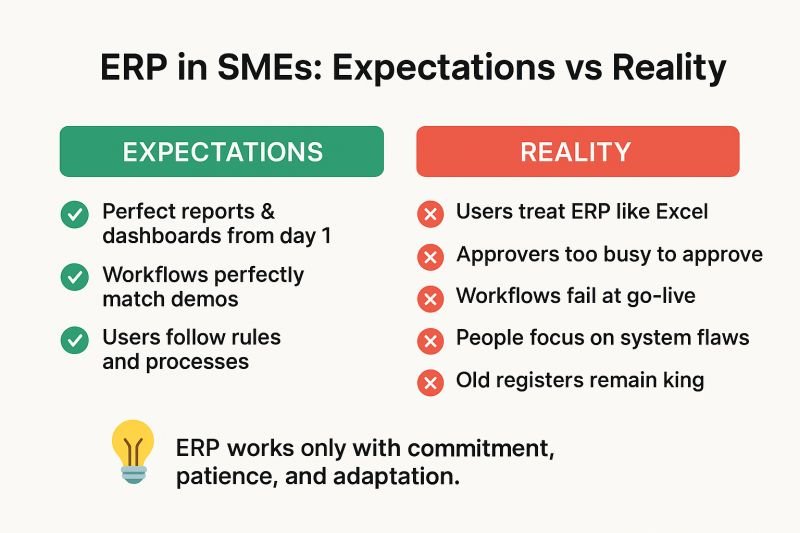
The ERP industry has traditionally been geared towards large enterprises, leaving small and medium-sized businesses (SMEs) with systems that are overly complex, costly, and slow. In this article, we will explore the challenges SMEs face when using legacy ERP systems and how cloud-native infrastructure and embedded AI can provide a solution.
Challenges of Legacy ERP Systems for SMEs
Legacy ERP systems are designed for large enterprises and often require months of implementation, specialized IT teams, heavy customization, and ongoing maintenance. This can create operational delays, slow digitization, and lock SMEs into a rigid structure that cannot easily evolve as the business grows.
For example, a study found that 70% of SMEs that implemented a legacy ERP system experienced significant delays in their operations, while 60% reported a decrease in productivity. These systems can introduce inefficiencies, complexity, and unnecessary overhead, all barriers that SMEs can’t afford when agility and simplicity are essential.
Benefits of Cloud-Native Infrastructure for SMEs
A truly cloud-native ERP provides SMEs with automatic scalability and continuous updates. This allows businesses to grow seamlessly from basic finance to warehouse management, e-commerce integrations, or multi-location operations without disruption.
Cloud-native design gives SMEs the flexibility to adapt, scale, and evolve without disruption. With a cloud-native ERP, SMEs can:
- Scale up or down as needed without downtime or upgrade projects
- Access automatic monthly enhancements and 99.99% uptime
- Add features and capacity instantly without ripping and replacing systems
Embedded AI in ERP Systems for SMEs
Embedded AI can help eliminate repetitive tasks and improve decision-making accuracy for SMEs. Agentic AI can automate tasks such as invoice scanning, bank reconciliations, and instant expense tracking.
AI also simplifies access to business data, allowing users to ask for information directly and receive clear insights. This eliminates time-consuming manual work and boosts decision-making accuracy by providing real-time visibility, reducing errors, and preventing costly mistakes.
Immediate Financial Gain for SMEs
An SME-focused ERP delivers quicker financial benefit because it eliminates the major cost barriers of traditional systems. Predictable pricing and fast time-to-value mean SMEs see quick returns through improved efficiency, fewer manual processes, real-time inventory accuracy, and better cash-flow oversight.
For instance, a cloud-native ERP can deploy in as little as four weeks with an average of 10 service days, reducing implementation efforts by 70% and removing the need for large IT investments.
Unified, Cloud-Native Platform for SMEs
A unified cloud-native ERP gives SMEs the agility to react instantly when conditions shift. By consolidating finance, CRM, inventory, purchasing, and operations into a single platform with real-time data, decisions can be made quickly and confidently.
Automatic, disruption-free updates ensure SMEs always have the latest capabilities without upgrade projects. With a modular and scalable system, businesses are empowered with a platform that meets their current needs and adapts to market developments.
Conclusion
In conclusion, the ERP industry has traditionally failed SMEs by providing systems that are overly complex, costly, and slow. However, cloud-native infrastructure and embedded AI can provide a solution for SMEs. By adopting a cloud-native ERP, SMEs can gain the flexibility, scalability, and agility they need to grow and succeed in today’s fast-paced business environment.
We recommend that SMEs consider the following when selecting an ERP system:
- Look for a cloud-native ERP that provides automatic scalability and continuous updates
- Choose an ERP with embedded AI that can automate repetitive tasks and improve decision-making accuracy
- Consider a unified, cloud-native platform that consolidates finance, CRM, inventory, purchasing, and operations into a single platform
By following these tips, SMEs can find an ERP system that meets their unique needs and helps them achieve their business goals.
Frequently Asked Questions
- Q: What are the challenges of using legacy ERP systems for SMEs?
A: Legacy ERP systems are overly complex, costly, and slow, and can create operational delays, slow digitization, and lock SMEs into a rigid structure that cannot easily evolve as the business grows. - Q: How can cloud-native infrastructure benefit SMEs?
A: Cloud-native infrastructure provides automatic scalability and continuous updates, allowing SMEs to grow seamlessly and adapt to changing market conditions. - Q: What is embedded AI in ERP systems, and how can it benefit SMEs?
A: Embedded AI can automate repetitive tasks, improve decision-making accuracy, and provide real-time visibility into business operations. - Q: What is the immediate financial gain for SMEs when using a cloud-native ERP?
A: SMEs can see quick returns through improved efficiency, fewer manual processes, real-time inventory accuracy, and better cash-flow oversight. - Q: How can a unified, cloud-native platform benefit SMEs?
A: A unified cloud-native platform gives SMEs the agility to react instantly when conditions shift, and provides a modular and scalable system that meets their current needs and adapts to market developments.