
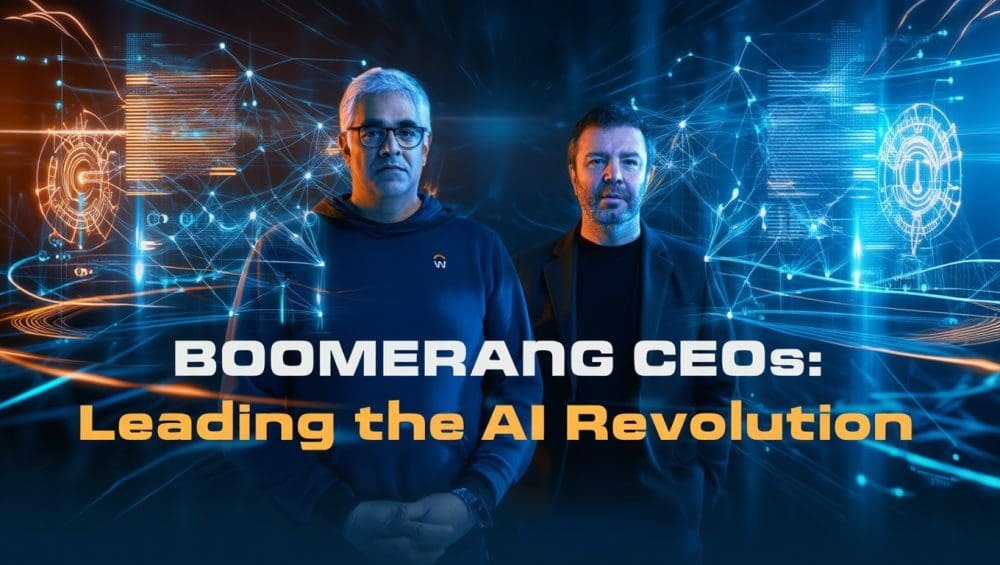
Why Founders Return to Their Companies in Times of Crisis
When AI threatens to disrupt entire industries, only the original visionaries can rewrite the playbook. Founders like Daniel Dines of UiPath and Aneel Bhusri of Workday are proving that in moments of existential risk, the person who built the company often holds the key to its survival.
The Boomerang Effect: Founders Stepping Back In
For decades, the standard career arc for tech founders has been clear: build a billion-dollar company, exit via IPO, and hand the reins to a seasoned operator. But generative AI is rewriting this script. As large language models and autonomous agents redefine what’s possible, boards are increasingly turning back to the people who created the original vision.
UiPath’s Daniel Dines: A 4-Month Retirement
Daniel Dines co-founded UiPath in 2005, turning robotic process automation (RPA) into a $1.78 billion business. In 2023, he stepped down as co-CEO, trusting longtime SAP executive Rob Enslin to lead. But by June 2024, Dines returned after just four months. Why? AI was threatening to render RPA obsolete. Dines recognized that only he could pivot the company toward “agentic automation,” where AI agents replace rigid bots.
- Launched Agent Builder and ScreenPlay to enable AI-driven workflows
- Revenue growth accelerated to 16% in Q3 2026
- Stock rose 50% from its lowest point
Workday’s Aneel Bhusri: A $1.3 Billion Comeback
Aneel Bhusri co-founded Workday in 2005, building it into a $8.4 billion cloud HR and finance leader. After stepping down in 2024, he returned in 2026 as CEO amid a $40 billion stock plunge. The SaaS model itself was under threat from AI’s potential to disrupt per-seat licensing. Bhusri’s $138.8 million return package included $75 million tied to stock recovery targets.
Why Founders Can’t Stay Away
Three patterns emerge when founders return:
- Category Leadership: Only the founder understands the original vision that built the company.
- Operational Agility: Founders can cut through bureaucracy to make rapid, high-risk decisions.
- Market Trust: Investors and customers often prefer the original architect during disruptions.
Historical Precedents
This isn’t new. Steve Jobs returned to Apple in 1997, Michael Dell in 2007, and Howard Schultz twice at Starbucks. Academic research shows boomerang CEOs underperform on average—but that ignores context. When AI threatens to erase a company’s value proposition, the founder’s unique perspective becomes irreplaceable.
Who’s Next? The AI Disruption Playbook
As AI reshapes enterprise software, expect more founders to return. Look for:
- Cloud infrastructure leaders (e.g., AWS, Snowflake)
- CRM platforms (e.g., Salesforce, HubSpot)
- Enterprise security firms (e.g., CrowdStrike, Palo Alto)
These companies face similar existential questions: Can AI agents replace traditional workflows? Will subscription models survive? Only the founder who invented the category can answer these questions.
Conclusion: The Founder’s Advantage in AI Disruption
The return of Dines and Bhusri isn’t just about leadership—it’s about survival. When AI threatens to disrupt a $1.78 billion or $8.4 billion business, the person who built the original vision holds the only map through the chaos. For investors and executives, the lesson is clear: In times of existential risk, the founder’s return isn’t a setback—it’s a lifeline.
FAQs
What causes founders to return to their companies during AI disruptions?
Founders often return when AI threatens to render a company’s core product obsolete. Their deep understanding of the original vision and ability to pivot quickly make them uniquely suited to navigate existential risks.
How did Daniel Dines transform UiPath after his return?
Dines shifted UiPath toward “agentic automation,” introducing tools like Agent Builder and ScreenPlay. This pivot accelerated revenue growth to 16% and restored investor confidence.
Why did Aneel Bhusri accept a $138.8 million return package?
Bhusri’s return was driven by the need to stabilize Workday’s $40 billion stock loss. The compensation structure tied half his earnings to stock recovery, reflecting the board’s belief in his leadership during AI-driven disruption.
Are founder returns effective in tech crises?
While academic studies show mixed results, founder returns are often effective during AI disruptions. Their unique vision and operational agility allow them to make high-risk decisions that professional operators might avoid.
Which industries will see more founder returns in 2025?
Cloud infrastructure, CRM platforms, and enterprise security are likely to see founder returns as AI threatens traditional SaaS models. Founders who built these categories will be called back to redefine them for the AI era.








