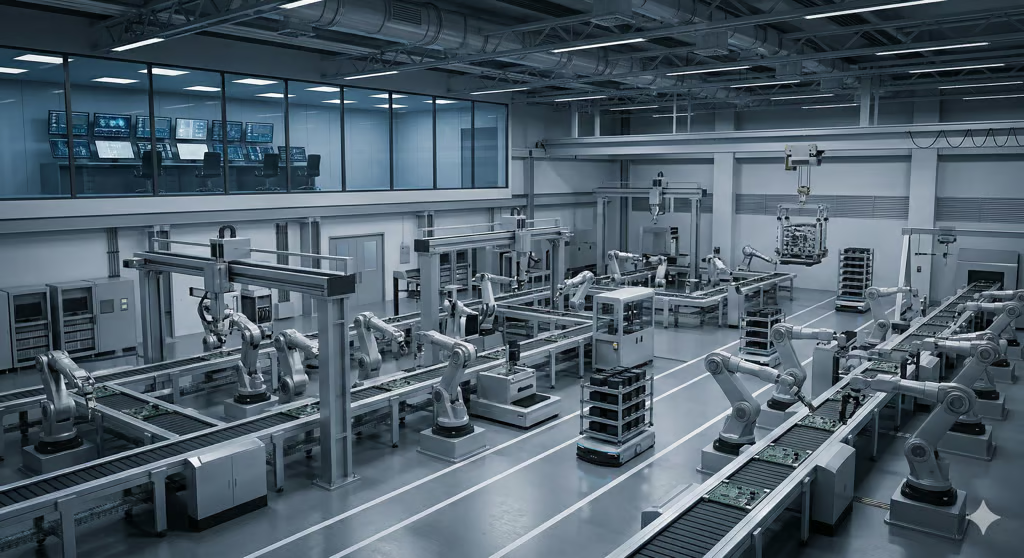
Xiaomi Humanoid Robots: Factory Implementation & Future Plans
Imagine a factory where robots aren’t just tools but co-workers with schedules, tasks, and performance metrics. Xiaomi is making this vision a reality. The company is integrating humanoid robots into its EV manufacturing process, treating them as active participants in production lines. This isn’t a sci-fi experiment—it’s a strategic move to boost efficiency and scalability.
How Xiaomi Humanoid Robots Are Working in Factories
At Xiaomi’s EV plant, humanoid robots are undergoing “internships” to learn repetitive, precision-driven tasks. These robots handle assembly steps that require both dexterity and consistency, such as component placement and quality checks. Unlike traditional automation, these humanoids adapt to dynamic environments, learning from real-time feedback.
Key Tasks for Humanoid Robots
- Assembly Line Precision: Performing delicate tasks like wiring and sensor installation.
- Quality Assurance: Scanning for defects using advanced vision systems.
- Logistics Support: Transporting materials between stations without disrupting workflows.
Timeline for Scaling Humanoid Robot Deployment
Xiaomi’s CEO, Lei Jun, outlined a phased rollout. The initial phase focuses on supervised roles, with full autonomy planned for 2027. By 2030, the company aims to replace 30% of manual labor with humanoid robots in high-volume production areas.
Challenges and Solutions
While the benefits are clear, Xiaomi faces hurdles like robot training and error correction. To address this, the company is investing in AI-driven learning systems that allow robots to improve over time. Human oversight remains critical during the transition phase.
Why This Matters for Manufacturing
Xiaomi’s approach signals a shift in how factories view robotics. Instead of replacing humans entirely, these robots augment workflows, reducing fatigue and errors. For manufacturers, this model offers a blueprint for balancing automation with human expertise.
Conclusion: The Future of Humanoid Robots in Factories
Xiaomi’s humanoid robots are more than a tech demo—they’re a step toward smarter, adaptive manufacturing. As the company scales this initiative, it sets a precedent for how industries can integrate AI into real-world production. Ready to explore the next frontier of factory automation? Share your thoughts in the comments!
FAQs
1. How are Xiaomi’s humanoid robots different from traditional automation?
Unlike rigid robotic arms, Xiaomi’s humanoids use AI to adapt to dynamic tasks, making them ideal for complex assembly work.
2. What tasks do Xiaomi humanoid robots perform in factories?
They handle precision assembly, quality checks, and logistics, reducing reliance on manual labor for repetitive tasks.
3. When will Xiaomi fully scale humanoid robot deployment?
Full autonomy is targeted for 2027, with 30% of manual labor replaced by 2030.
4. What challenges does Xiaomi face with humanoid robots?
Training robots for error-free performance and ensuring seamless human-robot collaboration remain key challenges.
5. How can other manufacturers adopt similar strategies?
Start with supervised roles, invest in AI training systems, and prioritize tasks where robots can enhance—not replace—human workers.