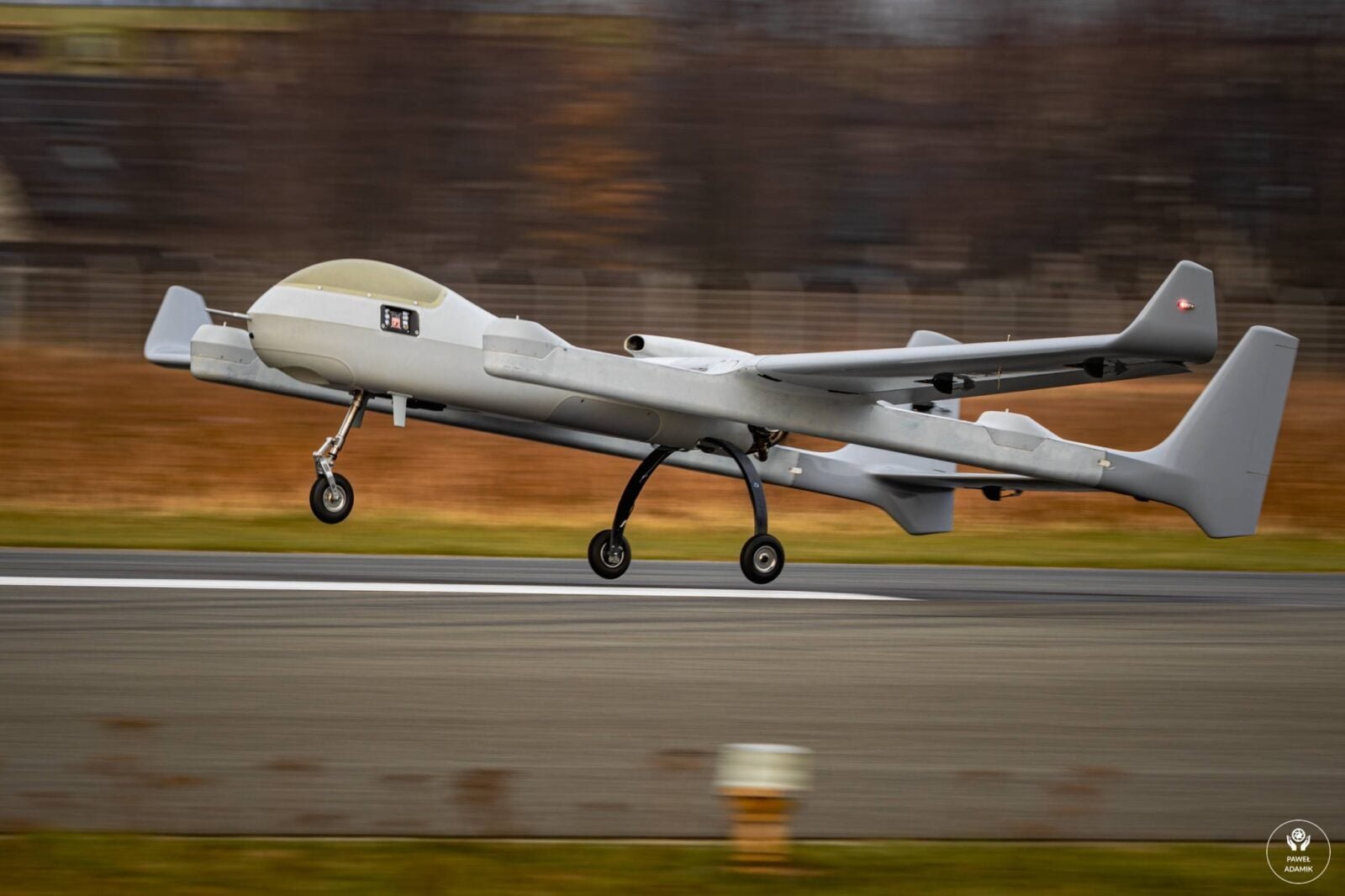
Introduction to ZEUS
The ZEUS unmanned aerial vehicle, developed by Ekolot Aerospace & Defense, has successfully completed its first test flights. This marks a significant milestone in the development of the ZEUS platform, which is designed for long-endurance missions with both vertical take-off and landing (VTOL) and conventional take-off and landing (CTOL) capabilities.
Key Features of ZEUS
The ZEUS platform integrates Spanish flight control systems from UAV Navigation-Grupo Oesía, enabling stable flight and autonomous operation. The system uses a modular design, allowing it to be adapted for different mission types, and can operate in environments where satellite navigation signals are degraded or unavailable.
Modular Design and Adaptability
The ZEUS family covers a range of configurations, with maximum take-off weights between 100 and 250 kilograms for VTOL variants and up to 350 kilograms for CTOL versions. The system has a payload capacity ranging from 30 to 120 kilograms for VTOL variants and up to 150 kilograms for the CTOL ZEUS G configuration.
Additionally, the ZEUS platform is designed to operate from remote or constrained locations without the need for prepared airstrips, making it ideal for areas where infrastructure is limited or under threat.
Advanced Autopilot Systems
The ZEUS platform integrates advanced autopilot systems from UAV Navigation-Grupo Oesía, including guidance, navigation, and control functions. The system is capable of operating in environments where electronic warfare can disrupt or deny GNSS signals, using high-precision inertial navigation and a visual navigation system.
Practical Applications
In practical terms, the ZEUS unmanned aircraft is designed to provide a reliable and efficient solution for long-endurance missions, lasting between 12 and 24 hours depending on payload and configuration. The system’s ability to operate in challenging environments makes it an attractive option for military and civilian applications alike.
For example, the ZEUS platform could be used for surveillance, reconnaissance, and communication relay missions in areas where traditional aircraft cannot operate. The system’s modular design and adaptability also make it an ideal choice for a range of applications, from border patrol to disaster response.
Conclusion and Future Developments
In conclusion, the ZEUS unmanned aircraft has successfully completed its first test flights, demonstrating stable flight and autonomous operation. With its advanced autopilot systems and modular design, the ZEUS platform is poised to become a leading solution for long-endurance missions.
As the development of the ZEUS platform continues, we can expect to see further advancements in its capabilities and applications. With its potential to operate in challenging environments and provide reliable and efficient solutions, the ZEUS unmanned aircraft is an exciting development in the field of unmanned aerial vehicles.
Therefore, it is essential to stay up-to-date with the latest developments in the ZEUS program and explore its potential applications in various fields. Meanwhile, the success of the ZEUS platform is a testament to the innovative spirit and collaborative efforts of Ekolot Aerospace & Defense and UAV Navigation-Grupo Oesía.
Finally, as we look to the future of unmanned aerial vehicles, the ZEUS platform is an exciting example of what can be achieved through cutting-edge technology and innovative design. For instance, the ZEUS platform could be used in conjunction with other unmanned systems to provide a comprehensive solution for a range of applications.
However, it is crucial to consider the potential challenges and limitations of the ZEUS platform, such as the need for advanced infrastructure and training. Additionally, the development of the ZEUS platform must be balanced with the need for safety and regulatory compliance.
Overall, the ZEUS unmanned aircraft is a significant development in the field of unmanned aerial vehicles, and its potential applications are vast and varied. As we continue to explore the capabilities of the ZEUS platform, we can expect to see new and innovative solutions emerge.
Call to Action
If you are interested in learning more about the ZEUS unmanned aircraft and its potential applications, we encourage you to stay tuned for further updates and developments. Additionally, we invite you to explore the possibilities of the ZEUS platform and discover how it can be used to address your specific needs and challenges.
Meanwhile, we would like to hear from you – what do you think about the ZEUS unmanned aircraft and its potential applications? Share your thoughts and opinions with us, and let’s continue the conversation.
Finally, we would like to thank you for your interest in the ZEUS unmanned aircraft, and we look forward to continuing to explore its capabilities and potential applications in the future.